Quick answer
No single person invented the key finder — it evolved in four generations. First came sound-activated keychains in the 1980s that beeped when you whistled or clapped. Then radio-frequency finders with a small remote. Next, Bluetooth Low Energy tags (made possible by the Bluetooth 4.0 standard in 2010) that talk to your phone. Today, finding networks built into iPhone and Android let millions of passing phones anonymously report where a lost tag is. The newest step is the format itself: credit-card-thin trackers like Ondrela that disappear into a wallet slot.
People have been losing keys for as long as there have been keys. For most of history the only tools were memory, patience and the occasional prayer to the patron saint of lost things. The idea that an object could answer back when you look for it is surprisingly recent — and the way it got here explains why today's trackers work the way they do. Here is the short, honest history, without invented dates or inventors.
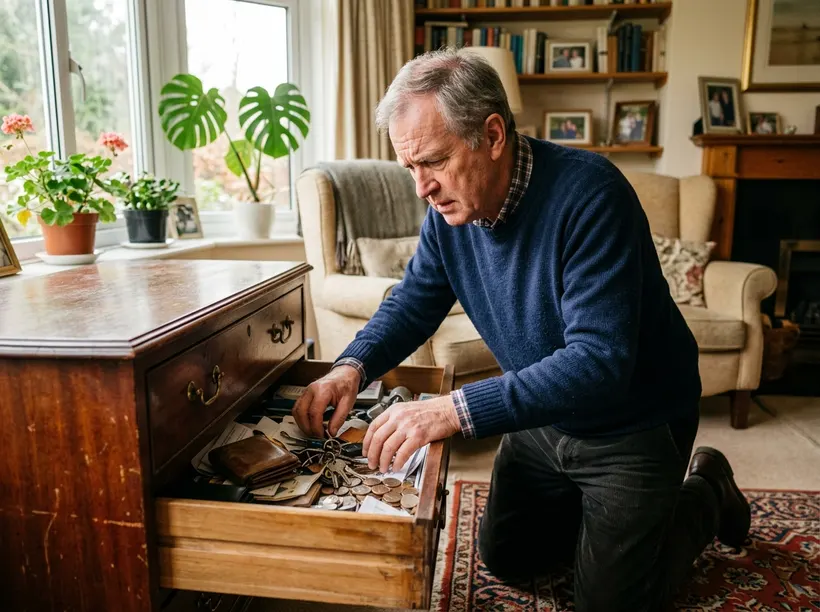
Generation 1: the whistle and clap keychain (1980s)
The first key finder most people remember was a novelty keychain with a tiny microphone and a beeper. Whistle or clap, and it would chirp back. It was a hit as a gift and a staple of gadget catalogs in the mid-1980s — a whistle-activated key ring even made a cameo as a spy gadget in the 1987 James Bond film The Living Daylights. The idea was brilliant: make the lost object announce itself.
The execution had limits. It needed a fairly quiet room, it sometimes reacted to the TV or a dog bark, and once the keys were outside earshot — in the car, at the office, at a restaurant — it could do nothing at all.
Generation 2: radio-frequency finders with a remote
Next came finders that swapped sound for radio. You attached small color-coded receivers to your keys, remote control or glasses, and pressed the matching button on a base unit to make one beep. No more whistling at the couch.
They worked well around the house, but you needed the base unit with you (and you could lose that, too), and the range ended at the walls of your home.
Generation 3: Bluetooth tags and the smartphone
The real turning point was Bluetooth Low Energy, introduced with the Bluetooth 4.0 specification in 2010. It let a coin-sized tag stay connected to a phone for months on very little power. Suddenly the “remote” was the phone you already carried everywhere. Early Bluetooth trackers in the 2010s added two big ideas:
- Ring from your phone — the whistle, but reliable.
- Separation alerts — the phone warns you when the tag drifts out of range, so you notice before the keys are lost.
The remaining weakness: once an item was far away, it could only be found if another user of the same app happened to pass by.
Generation 4: finding networks built into the phone
The last big leap came when finding networks moved into the operating systems themselves. Apple opened its Find My network to item trackers and launched AirTag in 2021; Google rolled out its own finding network for Android in 2024, now part of Find Hub. Every compatible phone nearby can now anonymously and securely relay a lost tracker's position to its owner — and the passerby never knows. We explain how this works in Bluetooth finder vs. GPS tracker.
Along the way, Apple and Google also worked on alerts for unknown trackers traveling with you, so the technology helps owners without being misused against others.
Then vs. now at a glance
| Generation | How you found things | Range | Main limit |
|---|---|---|---|
| Whistle / clap keychain | Whistle, it beeps | Earshot | False alarms, useless outside the room |
| RF finder with remote | Press a button on the base | Inside the home | The base unit gets lost too |
| Early Bluetooth tag | Phone rings it, separation alert | Bluetooth range, plus app users | Thin network far from home |
| Tag on a built-in finding network | Map, sound, left-behind alerts | Anywhere compatible phones pass | Round shape bulges in a wallet |
| Card tracker (Ondrela) | Map, sound, left-behind alerts | Same network, iPhone and Android | A wireless recharge now and then |
Why the newest step is about shape
Round tags are perfect on a key ring. In a wallet they bulge, shift around and press against your cards — we compared both in AirTag vs. card tracker for your wallet. So the most recent generation keeps everything that works — finding network, sound, left-behind alerts — and puts it into a credit-card-thin body. The Ondrela card we reviewed is a good example: it slides into a card slot, hangs on a key ring or drops into a bag, and recharges wirelessly instead of using a coin battery.
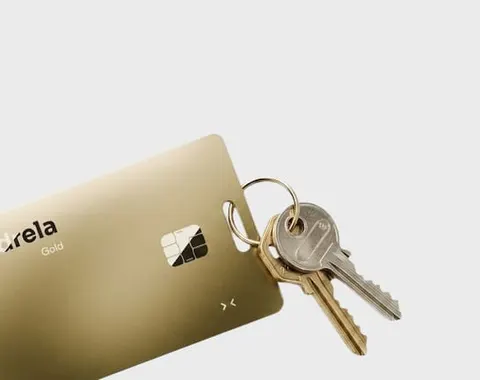
Our recommendation: Ondrela
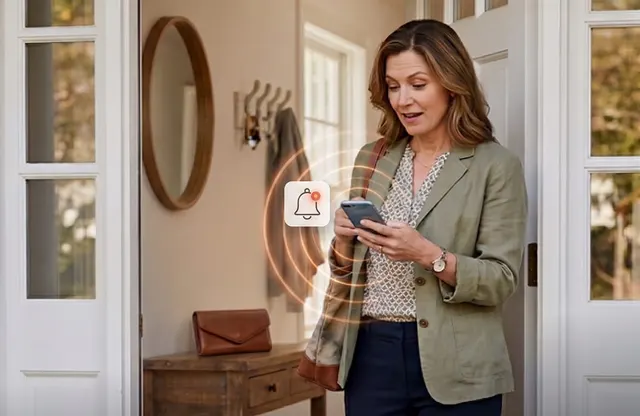
Forty years after the whistle keychain, the idea is finally complete. Ondrela is the modern key and wallet finder we recommend — everything the earlier generations promised, in a format made for everyday carry:
- Left-behind alerts: your phone warns you as soon as you walk away from your keys or wallet.
- Last-seen location on a map: you know where to go back to.
- Ring to find: the whistle keychain's promise, without the false alarms.
- iPhone and Android: it uses the finder already built into your phone — no extra app, no account, no monthly fee.
- Credit-card thin and water-resistant: fits a card slot without a bulge.
- Wireless charging: about six months per charge according to the maker, on any standard wireless pad.
At the official checkout we verified bundle pricing: 1 card $44.99, 2 cards $69.98, 3 cards $89.97 and the most popular 4-pack at $99.96 — $24.99 per card, plus $4.95 standard shipping. Every order comes with a 60-day return policy.
Frequently asked questions
Who invented the key finder?
There is no single inventor. Sound-activated keychains that beep when you whistle or clap became a popular gadget in the 1980s, radio-frequency finders with a remote came later, and modern Bluetooth trackers grew out of the Bluetooth Low Energy standard introduced with Bluetooth 4.0 in 2010.
How did old whistle key finders work?
A small microphone listened for a whistle or clap at a certain pitch and triggered a beeper. They worked in a quiet room but often reacted to other noises and could not help once the keys were out of earshot.
What changed with Bluetooth trackers?
Bluetooth Low Energy let a tiny tag talk to your phone for months on little power. Later, finding networks built into iPhone and Android let nearby phones anonymously report a lost tag's location, so you can see it on a map even far from home.
Why are some trackers shaped like a credit card?
Round tags suit a key ring but bulge in a wallet. A credit-card-thin tracker slides into a card slot, so the wallet stays slim while still showing up on your phone's map.
Does Ondrela work with iPhone and Android?
Yes. Ondrela works with the finder app already built into iPhone and Android, with no extra app, no account and no monthly fee.