The short answer
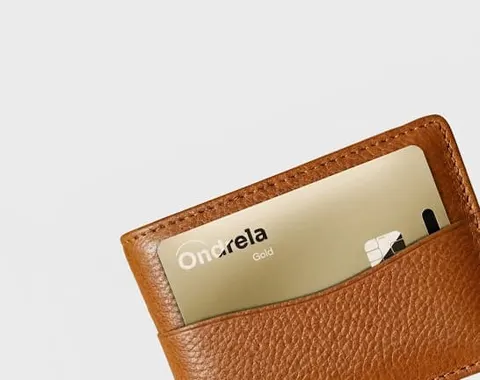
Yes, you can put an AirTag in a wallet — but it was never designed for one. It's a round disc about 8 mm thick, so it bulges in a normal bifold, usually needs a special holder, and it only works if you own an iPhone. For a wallet, a credit-card-thin tracker is the better fit: it slides into a regular card slot, works with the finding app already on iPhone and Android, recharges wirelessly and still gives you left-behind alerts, a map view and ring-to-find. That's exactly the job the Ondrela card was built for.
"Can I just throw an AirTag in my wallet?" is one of the most common questions people ask right after losing their wallet for the first time — or right after buying an AirTag for their keys and realizing how well it works. It's a fair question. AirTags are popular for good reason. But a wallet is a very different place from a key ring, and the shape of the tracker ends up mattering more than almost anything else. Here's what actually happens when you try it, and what the alternative looks like.
What happens when you put an AirTag in a wallet
Apple lists the AirTag at roughly 32 mm across and 8 mm thick. On a key ring, that's tiny. Inside a wallet, it's a different story:
- The bulge. A bifold is designed around flat cards. An 8 mm disc creates a visible lump, makes the wallet sit awkwardly in a back pocket and puts stress on the leather over time.
- The holder. Because it won't sit flat in a card slot, most people end up buying a dedicated "AirTag wallet" or a card-shaped sleeve to hold the disc — an extra purchase just to make the tracker fit.
- It's easy to spot. A round lump in a wallet is obvious to anyone who opens it. A tracker that looks like just another card is far less likely to be noticed and tossed.
- iPhone only. An AirTag has to be set up and tracked from an iPhone or iPad. If you — or your partner, or your teenager — use Android, it simply won't work for them.
None of this makes the AirTag a bad product. It's a great key-ring and luggage tag. It just wasn't shaped for the one item people are most afraid to lose.
AirTag vs. card tracker: side by side
Here's how a classic round tag compares with a card-shaped tracker like Ondrela on the things that matter for a wallet.
| What matters in a wallet | Round tag (AirTag) | Card tracker (Ondrela) |
|---|---|---|
| Shape & fit | Round disc, about 8 mm thick — bulges, usually needs a holder | Credit-card size and thinness — slides into a normal card slot |
| Phones supported | iPhone / iPad only | iPhone and Android, using the finding app already built in |
| Power | Replaceable coin battery | Rechargeable on any standard wireless charging pad (about 6 months per charge, per the maker) |
| Left-behind alerts | Yes (iPhone) | Yes |
| Ring to find | Yes | Yes |
| Map of last known location | Yes, via Apple's network | Yes, via the phone finding network |
| Water resistance | Yes | Yes |
| Monthly fee | None | None — one-time purchase |
| Looks like | A tracker | Just another card |
Both rely on the same basic idea: the tracker doesn't have its own GPS or cellular connection. Instead, nearby phones detect it over Bluetooth and anonymously report its location. That's why both work best in towns and cities, where phones are everywhere. (If you're weighing that against a true GPS tracker with a SIM card, our Bluetooth finder vs. GPS tracker guide breaks down the trade-offs and the three-year cost.)
Why the card shape matters more than you'd think
The whole point of a wallet tracker is that you forget it's there. If it bulges, you'll take it out "just for today" — and that's the day the wallet stays on the café counter. A card-shaped tracker removes that friction completely:
- It lives where your cards liveSlide it into any slot and it stays there. No holder, no special wallet, no re-arranging your everyday carry.
- It works in more than walletsThe same flat shape fits a passport holder, a phone case with a card pocket, a laptop sleeve or the inner pocket of a bag — places a round tag can't go.
- It doesn't advertise itselfAnyone opening the wallet sees a gold card, not a gadget. That gives you more time to see where it was last detected.
- No battery huntingInstead of keeping coin cells around, you lay it on the same wireless pad you use for your phone a couple of times a year.
Meet Ondrela: the tracker shaped like a credit card
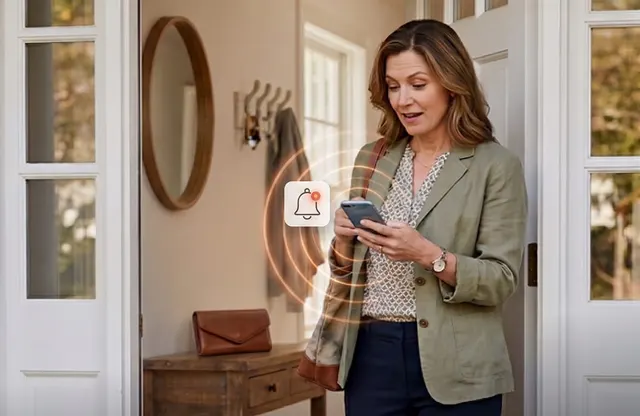
Ondrela is a gold, credit-card-thin tracker made specifically for wallets and other flat spaces. It connects to the finding app that's already on your phone — Find My on iPhone, the built-in finder on Android — so there's no extra app and no account to create. We tested it in depth in our full Ondrela review.
- Left-behind alerts the moment you walk away from your wallet — at a restaurant, in a rideshare, on a train seat.
- Map view of where your wallet was last detected, updated by nearby phones on the finding network.
- Ring on command to find it under the couch cushions or at the bottom of a bag.
- Wireless charging on any standard pad, with about six months per charge according to the maker.
- Water resistant, with encrypted location data.
- No subscription — the checkout states it's a one-time purchase.
At the official checkout we verified bundle pricing from $44.99 for one card down to $24.99 per card in the 4-pack ($99.96 total), plus $4.95 standard shipping, with a 60-day return policy. Buying a few at that price lets you cover the wallet, the passport holder and a family member's wallet too.
Like every Bluetooth finder, it updates its location through phones passing nearby — and in everyday life (restaurants, offices, transit, airports) those phones are everywhere, while the left-behind alert usually catches the problem before it ever becomes a search.
So which should you choose?
- For keys or a suitcase handle, a round tag on a ring is perfectly fine.
- For a wallet, passport holder or card case, choose a card-shaped tracker. It fits without a holder, stays hidden and won't make you leave it at home.
- If anyone in the family uses Android, choose a tracker that supports both platforms — Ondrela does. Our guide Is there an AirTag for Android? walks through the full checklist.
- If you hate swapping batteries, a wireless-charging card is simply less hassle.
And whichever you pick, pair it with good habits — a fixed home for your wallet and a quick pat-down every time you leave a table or a seat. Our article on why your brain keeps losing keys and wallets explains why those two habits work so well. If your phone is the thing that goes missing, see our step-by-step guide on how to find a lost or stolen phone.
Our recommendation: Ondrela, the tracker that actually fits in your wallet
If the question that brought you here is "can I put an AirTag in my wallet?", our answer is simple: you can, but you don't have to fight the bulge. Ondrela is the option we recommend for wallets because it was designed for exactly that spot — it's shaped and sized like a credit card, so it slides into an ordinary card slot and your wallet closes the way it always has. No special AirTag wallet, no holder, no ring.
It also removes the two other AirTag headaches for wallet carriers: it works with both iPhone and Android, so the whole family can use it, and it recharges on a standard wireless pad instead of needing coin batteries. You keep left-behind alerts, the last known location on a map and ring-to-find, with no subscription. Pricing at the official checkout starts at $44.99 for one card and drops to $24.99 per card in the 4-pack, with a 60-day return policy — enough to cover your wallet, a passport holder and a partner's wallet in one order.
Frequently asked questions
Can you put an AirTag in your wallet?
Yes, but it isn't a natural fit. An AirTag is a round disc about 8 mm thick, so in a regular bifold it creates a noticeable bulge, and most people end up buying a special wallet or holder with a dedicated AirTag pocket. A credit-card-shaped tracker slides into a normal card slot instead.
Does an AirTag work with Android phones?
No. An AirTag needs an iPhone or iPad to be set up and tracked. Android phones can only scan for unknown AirTags nearby for anti-stalking purposes. If anyone in your household uses Android, a tracker that works with both iPhone and Android is the more flexible choice.
What is the best tracker for a wallet?
For a wallet, the shape matters most: you want something thin enough to sit in a card slot without bulging. A card-shaped tracker such as Ondrela fits like a credit card, works with the finding app already on iPhone and Android, sends left-behind alerts, can ring on command and has no monthly fee.
How do card trackers charge?
Many card trackers, including Ondrela, are rechargeable instead of using a coin battery. Ondrela charges on a standard wireless charging pad, and the maker states a battery life of around six months per charge.
Will a wallet tracker find my wallet if it's stolen?
It can help. Bluetooth trackers update their location when a compatible phone passes nearby, so in busy areas you can often see where the wallet was last detected. That information is useful to share with the police. Don't try to recover a stolen item yourself.