The short answer
If you're still in the terminal, walk straight back to the checkpoint and ask a TSA officer — that's the fastest fix by far. If you've already boarded or flown, contact the TSA Lost and Found office at your departure airport (not the airline) and file a claim with your flight date, terminal and a detailed description. TSA says it holds checkpoint items for at least 30 days. To stop it from happening on your next holiday trip, put a tracker with left-behind alerts in your wallet and carry-on — we recommend the Ondrela card tracker.
The bins are rolling, the line behind you is impatient, you're juggling shoes, a belt, a laptop and a boarding pass — and ten minutes later, at the gate, your hand goes to your pocket and finds nothing. The wallet is still sitting in a gray bin at the security checkpoint.
It happens to an enormous number of travelers, and the busiest weeks of the year are exactly when it happens most. Thanksgiving week and the late-December rush pack checkpoints with people who fly once or twice a year, carry more bags than usual and are thinking about family, not their belongings. The good news: items left at security are usually handed in, and there's a clear process to get them back.
Why the security checkpoint is where things go missing
Airport security is the single most "unpacked" moment of any trip. In a few minutes you take apart everything you're carrying, scatter it across three or four bins, and then have to put it all back together in a hurry while new bins keep arriving. A few things make it worse during the holidays:
- More bins per person. Coats, scarves, gifts in carry-ons and extra electronics mean more pieces to reassemble.
- Split attention. Traveling with kids or parents means you're watching people, not bins.
- Pressure to move. Long lines make people grab the big items and leave the small ones — wallets, phones, watches, passports, earbuds.
- The "it's in my jacket" assumption. You feel sure the wallet went back in a pocket, so you don't check until the gate.
As we explain in why your brain keeps losing keys, wallets and phones, transitions like this are where memory fails: the brain never records the moment you put the item down.
What to do in the next 10 minutes (still in the airport)
- Go back to the same checkpoint nowDon't wait until you land. Return to the exit side of the checkpoint you came through and tell the first TSA officer what you left, which lane and roughly when. Unclaimed items are usually collected from the area quickly, and officers can check.
- Describe it precisely"Brown leather wallet, driver's license in the name of…" gets results faster than "my wallet." Brand, color, case and stickers matter for phones and laptops.
- If boarding is close, tell the gate agentGate agents can't search the checkpoint for you, but they know how much time you have and can sometimes point you to the fastest route back.
- Check the map if the item has a trackerIf you tagged the wallet or bag, open your phone's finder app. Seeing that it's still at the checkpoint (and not at the coffee shop) tells you exactly where to go.
If you've already flown: how to file a TSA lost item claim
Once you're on the plane, the item stays at your departure airport. Here's the order that works:
- Find your airport's TSA Lost and Found contactTSA's website has a Lost and Found page with a contact for each airport. Some airports use a phone number, others an online claim form.
- Submit the claim the same dayInclude your flight date and time, airport, terminal, checkpoint if you know it, a detailed description and your phone and email. Not every found item is posted online, so file even if you don't see yours listed.
- Protect yourself while you waitIf it's a wallet, lock or freeze your cards in your banking app right away. Our lost wallet checklist covers the full first hour.
- Arrange pickup or shippingIf it's found, you can usually pick it up or have it shipped, typically at your expense. Follow the instructions from that airport's office.
- Follow up, politely and on scheduleTSA says checkpoint items are held for a minimum of 30 days. A short follow-up every few days keeps your claim on the radar.
Who to contact depends on where you left it
| Where it was left | Who has it | What to do |
|---|---|---|
| Security checkpoint bins or tables | TSA Lost and Found (departure airport) | Go back now, or file a claim with TSA for that airport |
| Gate, restroom, shop or restaurant | The airport's own lost and found | Contact the airport authority's lost and found |
| On the plane (seat pocket, overhead bin) | The airline | Tell the crew if still on board; otherwise file with the airline |
| Inside a checked bag that arrived missing | The airline (bag) / TSA (if item missing after screening) | File at the baggage office — see our lost luggage guide |
A 6-point checkpoint routine for your holiday trips
The best claim is the one you never file. Before Thanksgiving and December flights, make this your routine:
- Pre-pack your pockets. Put wallet, phone, keys and watch inside your carry-on before you reach the bins — one bag in, one bag out.
- Use as few bins as possible. Fewer bins means fewer chances to leave one behind.
- Count your bins. "Three bins in, three bins out" takes two seconds.
- Re-pack at the bench, not the belt. Step away to the seating area and put yourself back together calmly.
- Do a last look back. One glance at the belt and the bins before you walk away.
- Let your phone watch your back. A tracker with left-behind alerts notices what your rushed brain doesn't.
That last point is the safety net. A card tracker like Ondrela, which we reviewed in detail, lives in the wallet's card slot, so it goes through the X-ray with everything else and warns you if you walk away without it. For the rest of your travel checklist, see 9 ways to keep your wallet, passport and luggage safe.
Our recommendation: Ondrela
For holiday travelers, Ondrela is the tracker we recommend — it's made exactly for the moment when your wallet or bag is about to stay behind.
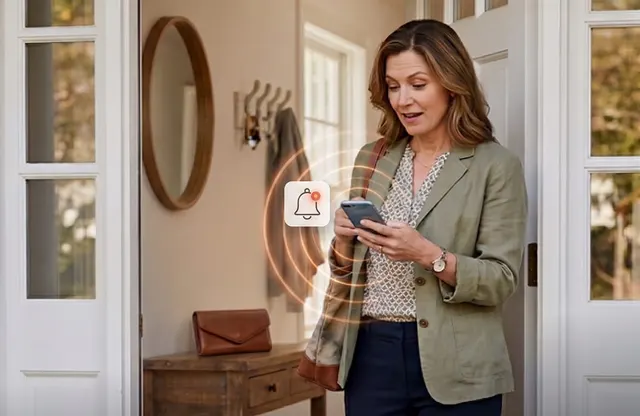
- Left-behind alerts: your phone pings you when you walk away from the wallet or carry-on — often before you've even reached the gate.
- Map view: if you've already left, see where the card was last detected, so you know whether to call TSA, the airport or the airline.
- Ring to find: lost it in the hotel room or at your parents' house? Make it ring.
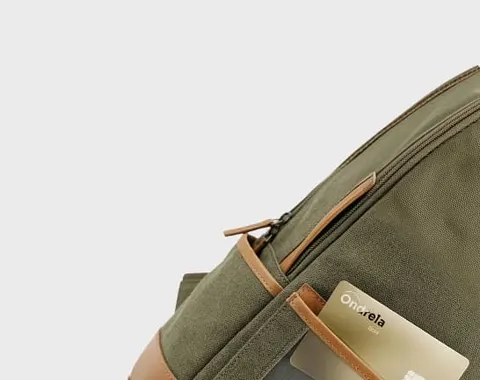
- Credit-card thin: it slides into a wallet slot, passport holder or the inner pocket of a suitcase, where round tags don't fit.
- Works with iPhone and Android: it uses the finder built into your phone — no extra app, no account, no monthly fee.
- Wireless charging: about six months per charge according to the maker, recharged on any standard wireless pad.
At the official checkout we verified bundle pricing: 1 card $44.99, 2 cards $69.98, 3 cards $89.97 and the most popular 4-pack at $99.96 — $24.99 per card, plus $4.95 standard shipping. A 4-pack covers your wallet, passport holder, carry-on and checked bag for the whole family trip. Every order includes a 60-day return policy, enough time to fly with it over Thanksgiving and the December holidays.
Frequently asked questions
Where do items left at a TSA checkpoint go?
Items left at the security checkpoint are handled by TSA Lost and Found at the airport you departed from, not by the airline and not by the airport's general lost and found. TSA's website lists a Lost and Found contact for each airport, either a phone number or an online claim form.
How long does TSA keep lost items?
According to TSA, items left behind at security checkpoints are held for a minimum of 30 days or until they are reunited with their owner. File your claim as early as possible rather than counting on the full window.
Can TSA mail my item to me?
In many cases, yes. If your item is found, you can usually arrange to pick it up or have it shipped to you, typically at your own expense. The exact process depends on the airport, so follow the instructions from your airport's TSA Lost and Found office.
What if I left it at the gate or in a restaurant, not at security?
Then it is not a TSA matter. Items left at the gate area, restrooms, shops or restaurants usually go to the airport's own lost and found, and items left on the plane go to the airline. Contact the right office first to save days of waiting.
What details should I include in a TSA lost item claim?
Include your flight date and time, the airport and terminal, the checkpoint if you know it, a detailed description of the item (brand, color, case, stickers, contents) and your phone and email. For a wallet, list the name on the cards so it can be matched quickly.
How can a tracker help if I leave something at airport security?
A tracker with left-behind alerts notifies your phone as you walk away from the tagged item, which is often enough to turn around before you reach the gate. If you have already left, the map shows where the item was last detected, which helps you describe it to TSA.