The short answer
Retrace your steps and call the last places you used your wallet, lock your cards in your banking apps, then protect your identity — a free credit freeze or fraud alert if your ID was inside, a replacement driver's license from your state DMV, and a police report if you think it was stolen. Work through it in that order and you limit almost all of the damage. Then make the next lost wallet a two-minute problem: a credit-card-thin tracker like Ondrela in one card slot alerts you the moment you walk away and shows where the wallet was last detected.
You pat your back pocket. Then the other one. Then your jacket, your bag, the car seat. That cold drop in your stomach when the wallet just isn't there is one of the most universal bad feelings there is — and it's exactly when people make rushed decisions, like cancelling every card before checking the restaurant they just left. The good news: losing a wallet is very fixable if you do things in the right order. This checklist is written so you can follow it top to bottom even when you're stressed.

Step 1: Stop, breathe and retrace (the first 10 minutes)
Most "lost" wallets aren't lost at all — they're sitting where you last set them down. Ten focused minutes beat an hour of frantic searching.
- Rebuild your timelineWhen did you last pay for something? Your banking app's recent transactions, a receipt in your bag or your rideshare history will show you exactly where you were and when. We walk through every clue your phone and bank already hold in can you track a lost wallet without a tracker?
- Check the "unusual" spotsA different jacket, the gap between car seats, the side pocket of a gym bag, under the couch cushions. Wallets usually vanish when we put them somewhere other than their normal place — we explain why in why your brain keeps losing keys and wallets.
- Call, don't just drive backPhone the restaurant, store, gym or office first. Staff often put found wallets in a safe or hand them over to the police after a day or two, so calling quickly matters.
- Rideshare, taxi or transit?Use the "lost item" option in your rideshare app's trip history, call the cab company on your receipt, or contact the transit agency's lost-and-found with your route and time. (Here is why so many found items never make it back, and how to fix it.)
Step 2: Lock your cards (the first hour)
Don't wait until you're sure the wallet is gone. Locking first and unlocking later costs you nothing; waiting can cost you a lot more.
- Credit cards: most issuers let you lock a card instantly in their app. If you see charges you don't recognize or you're sure it was stolen, report it lost or stolen so it's cancelled and replaced. Under federal law, your liability for unauthorized credit card charges is capped, and many issuers advertise $0 fraud liability.
- Debit cards: these matter even more, because they're tied directly to your checking account. Lock or report them right away — with debit cards, how fast you report can affect how much of an unauthorized withdrawal you're protected from.
- Digital wallets: if your cards are in Apple Pay or Google Wallet on your phone, they keep working there even after you lock the physical cards in many cases — check with your bank.
- Store cards and gift cards: call the store if they hold a balance; some can be replaced with a receipt or registration.
Step 3: Protect your identity
Cash is replaceable. Your identity is the thing worth guarding. If your wallet had a driver's license, Social Security card, insurance cards or anything with your address and date of birth, take these steps the same day:
| What to do | Where | Why it helps |
|---|---|---|
| Credit freeze | Equifax, Experian and TransUnion (each one separately; free) | Blocks new credit accounts in your name; you can lift it anytime |
| Fraud alert | Any one of the three bureaus (it notifies the other two) | Tells lenders to verify your identity before opening credit |
| Replace driver's license / state ID | Your state DMV or Secretary of State | Gets you a new ID and a record that the old one was lost |
| Report identity theft (only if it happens) | IdentityTheft.gov (Federal Trade Commission) | Builds a personal recovery plan if someone misuses your information |
| Health insurance card | Your insurer's member services line | Request a replacement and flag the loss |
| Social Security card | Social Security Administration | Request a replacement — and then keep it at home, not in your wallet |
Want to know exactly what the official guidance says about each of these tools? We broke it down in what the FTC says to do about identity theft after a lost wallet.
Rules and fees vary by state and provider, so always confirm the current steps on each official website.
Step 4: File a report if it may have been stolen
If your bag was opened, your pocket was picked, or you were in a crowded spot where theft is common, file a report with your local police department (many accept non-emergency reports online). A report number is useful if you later need to dispute fraud or replace documents. If you have any location information — for example, a tracker showing where the wallet was last detected — share it with the police. Never try to confront someone or recover a stolen wallet on your own.
Keys missing too? That double loss is common; here is why keys, phone and wallet go missing together and what to look for first. Lost your phone along with the wallet? Our step-by-step guide to finding a lost or stolen phone covers Find My, Find Hub and what to do if it's truly gone. Heading out for holiday shopping? See the 6 moments wallets and keys get left behind at the mall.
Step 5: Watch your accounts for the next few weeks
- Turn on transaction alerts in every banking and card app so you see every charge in real time.
- Check your credit reports for accounts you don't recognize (you can get free reports from the official AnnualCreditReport.com site).
- Update autopay and subscriptions with your replacement card numbers so bills don't bounce.
- If the wallet turns up, unlock anything you only locked, and let the police know so they can close the report.
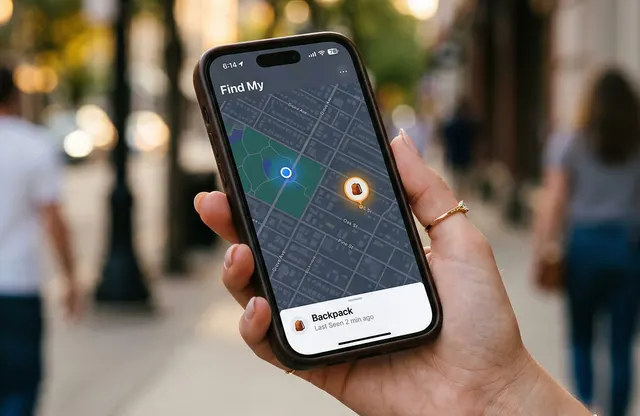
Never search blind again: put Ondrela in your wallet
Ask anyone who's lost a wallet what they wanted most in that moment, and the answer is almost always the same: "I just wanted to know where I left it." That's exactly what Ondrela gives you. It's a gold tracker card about as thin as a credit card, so it slides into a normal card slot and simply stays there (we cover it in depth in our Ondrela review).
- Left-behind alerts: your phone pings you as soon as you walk away from your wallet — usually before you've even left the restaurant or the rideshare.
- Last known location on a map: Ondrela works with the finding app already on your phone (Find My on iPhone, the built-in finder on Android). Nearby phones on the finding network anonymously update its location, so in busy areas you can see where your wallet is.
- Ring to find: lost it somewhere in the house? Make it ring and follow the sound.
- Built for daily carry: water resistant, rechargeable on any standard wireless charging pad, with about six months per charge according to the maker.
- No app to download, no subscription: the checkout states it's a one-time purchase.
At the official checkout we verified pricing from $44.99 for one card down to $24.99 per card in the 4-pack, plus $4.95 standard shipping, with a 60-day return policy. Like every Bluetooth finder, location updates depend on phones passing nearby, so a very remote spot can take longer to refresh — but in everyday places like restaurants, offices, transit and airports, the alert usually catches the problem before it ever becomes a search. Wondering whether an AirTag would do the same job? We compared both in AirTag vs. card tracker for your wallet.
A 60-second "lost wallet kit" to set up today
- Photograph the front and back of your cardsStore the photos in a secure, password-protected place so you have the issuer phone numbers when you need them.
- Carry lessLeave your Social Security card, spare cards and anything you don't use weekly at home.
- Turn on card alerts nowReal-time notifications are the fastest fraud detector you have.
- Give your wallet a fixed homeSame pocket when you're out, same tray when you're home.
- Add a tracker cardSo the next time it goes missing, you start with a map instead of a guess.
Our recommendation: make Ondrela the last step of your lost-wallet kit
The kit above limits the damage when a wallet goes missing. Ondrela is what we recommend to make sure that next time, the search is over in minutes. Once it's in a card slot, the hardest part of this whole checklist — "where did I leave it?" — answers itself: your phone alerts you as you walk away from the table or the rideshare, and if you're already home, the app shows where the wallet was last detected.
That changes the first hour completely. Instead of calling every place you visited and freezing cards in a panic, you open the finding app you already have on your iPhone or Android, see the location and go get it — or, if it was taken, hand that location to the police. There's nothing to subscribe to, it recharges wirelessly, and the 4-pack at $24.99 per card lets you put one in your partner's wallet too, with a 60-day return policy on the order.
Frequently asked questions
What is the first thing to do when you lose your wallet?
Pause for a minute and retrace your steps: where did you last pay, sit or take something out of your pocket? Call those places right away. At the same time, open your banking apps and lock or freeze your cards so no one can use them while you search.
Should I cancel my cards or just lock them?
If your bank's app lets you temporarily lock a card, do that first — you can unlock it if the wallet turns up. If you are fairly sure the wallet was stolen, or you see charges you don't recognize, report the card lost or stolen so the issuer cancels it and sends a replacement.
Do I need to freeze my credit after losing my wallet?
If your wallet held your driver's license, Social Security card or other ID, freezing your credit is a smart precaution. A credit freeze is free at each of the three major bureaus — Equifax, Experian and TransUnion — and it stops new accounts from being opened in your name. You can lift it whenever you need to apply for credit.
Do I need a police report for a lost wallet?
It isn't always required, but it helps. A report creates a record if your identity is later misused, and some banks, insurers or DMVs may ask for one. If the wallet was stolen, file a report and share any location information you have with the police rather than trying to recover it yourself.
How do I replace my driver's license?
Contact your state's DMV (or Secretary of State, depending on your state). Many states let you request a replacement license online; others require a visit. Check your state's official DMV website for the exact steps and fee.
How can I find my wallet faster next time?
Put a card-shaped tracker such as Ondrela in one of the card slots. It sends a left-behind alert when you walk away from your wallet, shows where it was last detected on a map in the finding app already on iPhone and Android, and can ring when it's somewhere nearby.