The short answer
Transit robberies are climbing again in 2026, and the quiet kind of theft — the bag lifted while you scroll, the phone snatched as the doors close — now makes up roughly half of all major subway crime. You can't watch your bag every second of a crowded commute, and no gadget will stop a determined grab. What you can do is change what happens after: most snatched bags get dumped within a few blocks once the thief has the cash and phone. A card-thin tracker tucked into your laptop bag or wallet gives you a last-seen location on a map and an instant alert the moment you and your bag are separated — the difference between "it's gone" and "here's where it went."
You know the layout of your commute better than you know your own kitchen. Same car, same corner, same three stops with your head down in a book or a phone. That familiarity is exactly what transit thieves count on — because the moment your attention is anywhere but your bag, the bag becomes the easiest target in the station.
The numbers behind the 2026 headlines
The reassuring news first: violent subway crime is not what most riders actually face. Through the first months of 2026, New York's transit felonies were down slightly overall, and grand larceny — theft of property worth more than $1,000 — hit one of its lowest first-quarter levels on record. But dig into the mix and a clear pattern shows up.
- Robberies are rising. NYPD transit figures reported by ABC7 in April 2026 showed subway robberies up about 15% year-to-date — 136 so far in 2026 against 118 in the same stretch of 2025 — even as assaults ticked down.
- Quiet theft dominates the total. Non-confrontational property theft — the pickpocket, the grab-and-go, the bag lifted off a bench — accounts for close to half of all major subway crime, according to the NYPD's own breakdown. The odds of being robbed at knifepoint are tiny; the odds of simply losing your bag to a distracted moment are not.
- Phones are a billion-dollar target. In the US, mobile-device theft and the resale fraud around it are tied to an estimated $7.5 billion in direct economic losses. And only about 48% of phone owners have "Find My"-style tracking switched on — meaning half of stolen phones start their journey with no way to be located at all.
None of that means the subway is dangerous. It means the realistic risk isn't drama — it's the ordinary, boring theft of an ordinary, expensive bag, and it happens fastest to people who aren't set up to respond.
How it actually happens — three moves thieves rely on
Transit theft isn't random. The same handful of setups show up again and again across cities, and every one of them exploits the same thing: a gap in your attention.
- The closing-doors trapThe signature subway move. You're seated near the door, back to the platform, phone in hand. A thief still standing on the platform reaches in, grabs the phone or the bag on your lap, and steps back just as the doors seal and the train pulls out. By the time you react, you're accelerating in the opposite direction. It's the single most reported technique on rail systems.
- The sleeping-rider liftLate train, long day, eyes closed for "just a second." Widely reported cases follow the same script: a commuter dozes off with a laptop bag at their feet or beside them, and wakes to find it — and the MacBook, the cards, sometimes prescription meds — simply gone. No struggle, no witness who noticed.
- The crowd coverThe boarding crush is a thief's best friend. Bodies pressed together give perfect cover to unzip a backpack worn on your back, slide a phone out of a coat pocket, or reach over a shoulder. You feel the jostle of the crowd and think nothing of it — that is the point.
What these share is timing: the theft lands in the exact instant your guard is down, and the getaway is built in — a closing door, a platform full of strangers, a crowd to melt into. You will not out-vigilance a professional every single day for years. So the smarter question isn't "how do I never get robbed?" It's "when it happens, what do I have working for me?"
What a tracker can and can't do — the honest version
Let's be straight, because overselling this helps nobody. A tracker will not stop a theft. It won't grab the thief's wrist, and if someone finds it and tosses it, its trail ends there. Anyone promising a $30 card will "protect" your laptop from being stolen is selling you a fantasy.
Here's what it does do, and why it matters more than it sounds:
- It catches the moment of separation. A left-behind alert pings your phone the instant you walk away from — or are separated from — the tagged item. In a closing-doors grab, that alert can hit before the train even clears the platform, turning "I noticed twenty minutes later" into "I noticed now," while you still know the station.
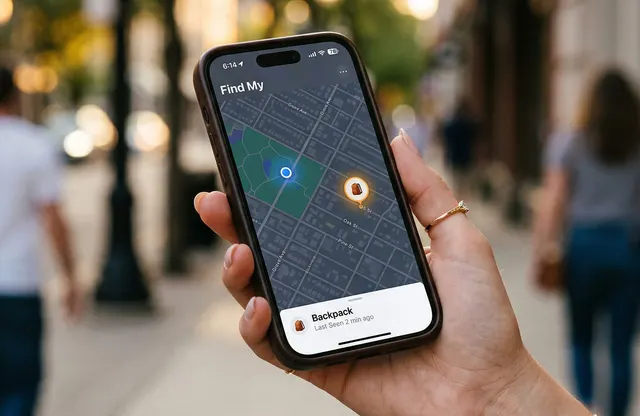
- It turns "gone" into a location. This is the real payoff. Snatch-theft is about the quick-sell items — cash, the unlocked phone. The bag itself, the passport holder, the charger, the notebook full of work? Frequently dumped a few blocks later. A finder-network card keeps reporting its last-seen spot on a map as it passes near other phones — so instead of a shrug, you hand the police report an address and a time.
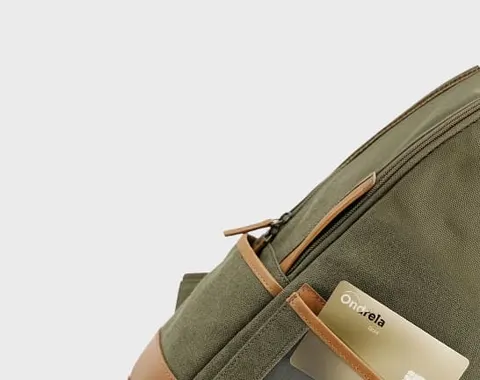
- It fits the things round tags can't. The items people most fear losing on a commute — the wallet, the passport, the slim laptop sleeve — have no room for a bulky keyring fob. A credit-card-thin tracker slides into the card slot or the flat inner pocket and disappears.
Your move: a realistic transit-theft plan
Set this up once and it runs in the background for years. In rough order of payoff:
- Turn on the tracking you already ownEnable Find My (iPhone) or Find Hub / Find My Device (Android) today. It's free, it's already on your phone, and half of owners never switch it on. This is step zero — do it before buying anything.
- Tag the bag, not just the phoneYour phone can find itself; your laptop bag, wallet and passport can't. Drop a card-thin tracker into each of the things whose loss would actually wreck your week. That's where the coverage gap is.
- Wear the backpack on your front in crowdsOn a packed platform or a crush at the doors, swing the bag around to your chest. It feels awkward for exactly as long as it takes to become second nature — and it closes off the crowd-cover move entirely.
- Break the closing-doors setupDon't sit or stand with your phone out and your back to an open door at a station. Keep the device in your hand only when the doors are shut and the train is moving. It's the cheapest habit on this list.
- Rehearse the first 60 secondsIf it's gone: mark the phone lost and remote-lock it, freeze your cards in the banking app, pull the last-seen location from your tracker or Find My, and file a police report with that location and time. Never chase a signal yourself — a location belongs in a police report, not in a confrontation.
Where Ondrela fits in this
Ondrela is the card-shaped piece of that plan — a credit-card-thin tracker that slips into a wallet, a passport sleeve or the flat pocket of a laptop bag, pairs with the finder app already on your iPhone or Android, and gives you left-behind alerts plus a last-seen map view, with no monthly fee. It won't stop a thief, and we'd never claim it does. What it does is make sure that if your bag disappears between two stops, you're not starting from zero — you're starting from a location.