Quick answer
The FTC’s advice comes down to three moves: report missing cards to the bank right away (your liability depends on how fast you do it), protect your credit with a free credit freeze or a fraud alert, and if anyone starts using your information, report it at IdentityTheft.gov to get a recovery plan. Below, we walk through what the official pages actually say, the difference between a freeze, an initial fraud alert and an extended fraud alert, and how to apply each one in the right order.
Losing a wallet feels like a money problem for the first ten minutes. Then it turns into a different worry: my driver’s license, my insurance card, maybe a check or my Social Security card were in there — can someone use that to become me? That’s the question the Federal Trade Commission’s consumer pages answer. We read the official guidance so you don’t have to piece it together from a dozen sites, and we turned it into a practical, step-by-step plan.
If you’re standing in a parking lot right now and haven’t searched yet, start with our first-hour lost wallet checklist. This article picks up from there and focuses on one thing: keeping a lost wallet from turning into identity theft.
Where the official guidance lives
Everything in this article is based on three free government resources:
- The FTC’s page on lost or stolen credit, ATM and debit cards — how much you can be responsible for and how to report.
- The FTC’s page on credit freezes and fraud alerts — what each tool does, how long it lasts and whom to contact.
- IdentityTheft.gov — the FTC’s official site to report identity theft and get a personalized recovery plan.
You never have to pay anyone to use these. Be wary of calls, texts or emails that show up right after you lose a wallet offering to “protect your identity” for a fee or asking for your card numbers.
Step 1: Report the cards — speed decides what you owe
The FTC is very clear that the law treats credit cards and debit cards differently. With a credit card, the most you might be responsible for is $50 for charges made before you report the loss, and nothing after you report it. With a debit or ATM card, your protection depends on timing:
| When you report a lost debit/ATM card | Your maximum loss (per the FTC) |
|---|---|
| Before any unauthorized charges | $0 |
| Within 2 business days after you learn of the loss | $50 |
| After 2 business days, but within 60 calendar days after your statement is sent | $500 |
| More than 60 days after your statement is sent | All the money taken from the account, and possibly more |
How to apply it: lock or report the debit card first, then credit cards. Use the bank’s app or the phone number on its website. The FTC also suggests following up in writing with the account number, when you noticed the card was missing and when you first reported it — and keeping a copy plus notes from your calls. After that, keep an eye on your statements and report anything you don’t recognize right away.
Step 2: Decide between a credit freeze and a fraud alert
Card locks protect the accounts you already have. A freeze or a fraud alert protects you against new accounts someone might try to open with your name, birth date and license number. Here is how the FTC describes each tool:
| Tool | What it does | How long | Whom to contact |
|---|---|---|---|
| Credit freeze | Nobody can open new credit in your name — including you — while it’s on | Until you lift it (free to place and lift) | All three bureaus: Equifax, Experian, TransUnion |
| Initial fraud alert | Businesses must verify your identity before opening new credit; your report stays visible | 1 year, renewable | One bureau, which must tell the other two |
| Extended fraud alert | Same check, for identity theft victims; also takes you off prescreened credit and insurance offer lists for 5 years | 7 years | One bureau; requires an FTC identity theft report or a police report |
Our reading of how to choose:
- The wallet held only cards and some cash, no ID: locking the cards is usually enough. An initial fraud alert is an easy extra layer.
- Your driver’s license, checks, Social Security card or several IDs were inside: a credit freeze at all three bureaus gives the strongest protection. If you plan to apply for a loan or a new card soon, you can temporarily lift the freeze at the bureau the lender uses, then put it back.
- You already see accounts or charges you didn’t make: that’s identity theft. Go to Step 3, then ask for an extended fraud alert.
A freeze and a fraud alert are not either-or. Many people place both: the freeze blocks new credit, and the alert adds a check if the freeze is ever lifted.
Step 3: If someone is using your information, report it at IdentityTheft.gov
The FTC’s card page says it simply: if you suspect identity theft, visit IdentityTheft.gov to report it and get a recovery plan. Typical warning signs after a lost wallet include:
- Charges or withdrawals you don’t recognize after you’ve already reported the card.
- Letters, emails or texts about credit accounts, loans or phone plans you never opened.
- Inquiries or new accounts on your credit report.
- Debt collectors calling about bills that aren’t yours.
The report you file there becomes your FTC identity theft report, which is what lets you request an extended fraud alert and helps when you dispute fraudulent accounts with companies and credit bureaus. If the wallet was stolen rather than misplaced, filing a police report too gives you a second official record.
Step 4: Replace IDs and keep watching your accounts
- Driver’s license: request a replacement from your state’s DMV; many states let you do it online.
- Social Security card: most people don’t need to carry it at all. If it was in the wallet, treat that as a reason to freeze your credit, and request a replacement through the Social Security Administration.
- Health insurance and other member cards: call the provider so they can flag or reissue the card.
- Credit reports: the FTC also recommends checking your credit reports; keep an eye on them in the months after a loss.
The official guidance in one checklist
| When | What to do |
|---|---|
| First hour | Retrace your steps, then lock or report the debit card, then credit cards |
| Same day | Place a credit freeze at all three bureaus (or at least an initial fraud alert at one) |
| Within a few days | Confirm card reports in writing; replace your driver’s license and other IDs |
| If you see misuse | Report at IdentityTheft.gov, follow your recovery plan, ask for an extended fraud alert |
| Following months | Review statements and credit reports regularly |
The step the official pages can’t take for you: finding the wallet
Every step above is damage control. It assumes the wallet is gone. But many wallets aren’t stolen at all — they’re left on a restaurant booth, in a rideshare or on a checkout counter, and the stress (and the freeze, the forms, the DMV line) starts only because you have no idea where the wallet is. We explained why a plain wallet can’t be tracked by your phone in can you track a lost wallet without a tracker?
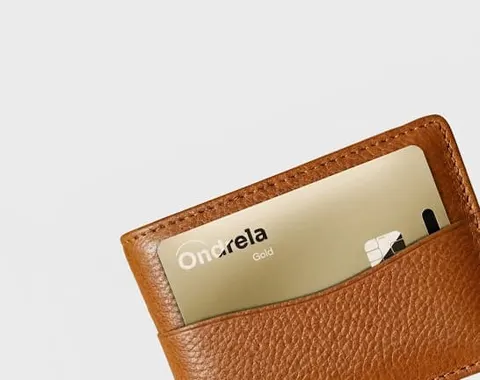
That’s exactly the gap a slim card tracker fills. The Ondrela card we reviewed in depth sits in a card slot and shows you where the wallet is — often before you even realize it’s missing. Knowing within minutes that your wallet is still at the coffee shop can mean the difference between a five-minute walk back and a full identity-theft checklist.
Our recommendation: Ondrela
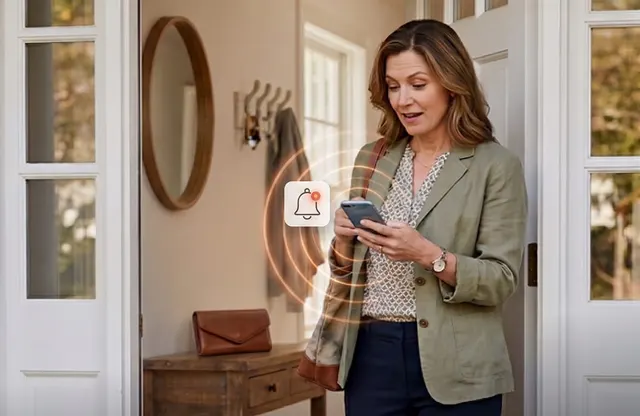
The FTC tells you how to recover after a wallet is gone. Ondrela is what we recommend so you rarely need that checklist at all. It’s a gold, credit-card-thin tracker made to live in your wallet:
- Left-behind alerts: your phone warns you as soon as you walk away from your wallet — at the counter, in the cab, at the restaurant.
- Last-seen location on a map: you know where to go back to, so you can act before anyone else picks it up.
- Ring to find: for the wallet under the car seat or in last night’s jacket.
- iPhone and Android: it uses the finder already built into your phone — no extra app, no account, no monthly fee.
- Credit-card thin and water-resistant: fits a card slot without a bulge.
- Wireless charging: about six months per charge according to the maker, on any standard wireless pad.
At the official checkout we verified bundle pricing: 1 card $44.99, 2 cards $69.98, 3 cards $89.97 and the most popular 4-pack at $99.96 — $24.99 per card, plus $4.95 standard shipping. Every order comes with a 60-day return policy. One for your wallet, one for your keys, and two for the people at home who always ask where theirs went.
Frequently asked questions
Should I freeze my credit if I lose my wallet?
If your wallet held your driver’s license, Social Security card, checks or several cards, a credit freeze is a strong choice. The FTC notes it is free to place and lift, lasts until you lift it, and stops anyone, including you, from opening new credit in your name. You need to contact Equifax, Experian and TransUnion separately.
What is the difference between a credit freeze and a fraud alert?
A freeze blocks access to your credit report for new accounts until you lift it. A fraud alert keeps your report open but tells businesses to verify your identity before opening new credit. An initial fraud alert lasts one year, and you only need to contact one bureau, which must tell the other two.
How much can I lose if someone uses my stolen debit card?
According to the FTC: $0 if you report the card before any unauthorized use, up to $50 if you report within 2 business days of learning about the loss, up to $500 if you report later but within 60 days after your statement is sent, and potentially all the money taken if you wait longer. That is why reporting a debit card fast matters most.
When should I go to IdentityTheft.gov?
When you suspect identity theft, for example new accounts you did not open, charges you do not recognize or someone using your personal information. The FTC says to visit IdentityTheft.gov to report it and get a recovery plan.
Do I need a police report for a lost wallet?
Not always. For a simple lost wallet with no misuse, locking your cards may be enough. If the wallet was stolen or your information is being misused, a police report or an FTC identity theft report helps, and either one is needed for an extended fraud alert.
Does Ondrela work with both iPhone and Android?
Yes. Ondrela works with the finder app already built into iPhone and Android, with no extra app, no account and no monthly fee.
This article summarizes publicly available FTC consumer guidance as of November 2026 and is not legal or financial advice. Rules, limits and procedures can change; always check the official FTC pages, your bank and the credit bureaus for current details.