Quick answer
Losing your keys or wallet feels bigger than it is because your body treats it like an emergency: plans, money and the door to your home are suddenly at stake. That stress makes the search harder, and repeated misses add frustration, shame and friction at home. The way out is to calm the moment (a 60-second reset), make losing things less likely (one spot, one routine) and remove the open-ended search, which is exactly what a tracker card in your wallet does.

Most articles about losing things are about logistics: where to look, which hook to buy. This one is about the part nobody talks about: how it feels. The racing heart when the keys aren't in your coat. The snap at your partner (“did you move them?”). The quiet voice afterwards saying you're hopeless. If that sounds familiar, you're in very good company, and there are practical ways to make it lighter.
Why a missing key can feel like an emergency
Your keys and wallet aren't really objects; they're access. They stand between you and your car, your home, your money and being on time. When they vanish, your brain doesn't calculate “small inconvenience.” It sees a threat to the next hour of your life, and it reacts the way it reacts to threats: with the stress response. Heart rate goes up, breathing gets shallow, attention narrows.
That reaction is useful for running from danger. It's terrible for remembering where you put something. Health organizations such as the National Institute of Mental Health describe how stress affects concentration and thinking, and anyone who has searched the same drawer three times knows the feeling: the more panicked you get, the less your search makes sense.
What it does to your day: the emotional cost, piece by piece
| What you feel | Where it comes from | What usually helps |
|---|---|---|
| Panic in the moment | Stress response: time pressure and “locked out” fears | A 60-second pause before searching |
| Frustration and irritability | Lost time, a ruined plan, the same problem again | A system so it happens less often |
| Shame (“what's wrong with me?”) | Treating a common autopilot slip as a personal flaw | Reframing it as a design problem |
| Tension at home | Blame, “have you seen my…” on repeat | Shared spots, fewer interrogations |
| Background worry when you go out | Fear of leaving the wallet somewhere | Left-behind alerts that do the remembering |
Frustration: the “not again” feeling
One lost wallet is an annoyance. The fifth one this month feels like proof that something is broken. That accumulated frustration often spills over: you're short with the kids, you skip the gym because you're already late, the whole morning goes sideways. It isn't the single search that wears you down; it's the repetition.
Shame: why you blame yourself (and why you shouldn't)
Here's the honest part: almost everyone misplaces everyday things, and for a boring reason. You put your keys down on autopilot while thinking about something else, so the memory of where was never really stored. We explain the mechanism in why we keep losing things. It's not a moral failing; it's how attention works. People with ADHD, new parents, shift workers and anyone going through a stressful season tend to feel it more, which is exactly when self-blame is least helpful.
Relationships: when “have you seen my keys?” becomes a fight
Lost items create small accusations: who moved it, who borrowed it, who never puts things back. Over time those add up. If this is your house, our guide to sharing card trackers in a family without arguments shows how couples cut the “interrogation” out of the morning.
7 ways to take the weight off
- Do a 60-second reset before you search. Stop, put both feet on the floor, take three slow breaths, and say out loud the last place you know you had it. Calm searches are shorter searches.
- Search in a set order, not in circles. Pockets and bag, then the last room, then the car. Writing the order on a sticky note by the door removes decisions when you're stressed.
- Swap the self-talk. Replace “I'm so stupid” with “my system has a gap.” It sounds small, but it turns shame into a problem you can fix.
- Give every essential one home. One tray or hook for keys and wallet, right by the door, used every single time.
- Find your hot spots. Keep a two-week “where did I lose it?” log; most people discover two or three places cause most of their losses.
- Agree on house rules. “We don't move each other's keys” prevents half the arguments.
- Let technology do the remembering. A tracker with left-behind alerts warns you before the wallet is gone, which is the moment that matters most for your stress. A slim card like the Ondrela tracker card fits right into a card slot, so it travels with the wallet automatically.
When to talk to someone
If worry about losing things fills a lot of your day, you avoid going out because of it, or it comes with other changes in memory, focus or mood, please talk to your doctor or a licensed mental health professional. Everyday misplacing is normal; constant distress is not something you have to live with. In the US, you can call or text 988 any time for free, confidential support.
Our recommendation: the Ondrela tracker card
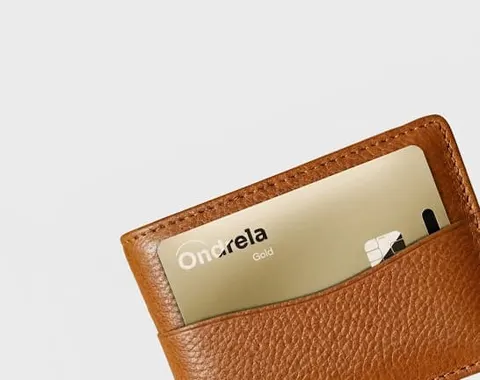
Habits lower how often things go missing. What actually lifts the weight is knowing that, when they do, you won't face an open-ended, heart-racing search. That's why the Ondrela tracker card is the tool we recommend for anyone tired of the panic: it turns “where is it?” into a quick look at your phone, and its left-behind alert catches the wallet before it's ever really lost. It was made exactly for the slim places round tags don't fit.
- Credit-card thin, so it slides into any card slot without bulk.
- Works with Find My on iPhone and Find Hub on Android, with no extra app and no subscription.
- Left-behind alerts and ring on command, so the search ends in seconds instead of minutes.
- Rechargeable on any wireless pad, with around six months per charge stated by the maker.
The 4-card bundle at $99.96 ($24.99 per card) is the most popular choice, enough for your wallet, keys, bag and a partner's wallet; 1 card is $44.99, 2 are $69.98 and 3 are $89.97, with fast standard shipping and a 60-day return policy. Get every detail in our full review or compare bundles on the home page.
Frequently asked questions
Why do I panic when I lose my keys?
Because your body reads a missing key or wallet as a threat to your plans: being late, locked out or without money. That switches on the stress response (faster heart, tunnel vision), and stress makes it harder to think calmly and retrace your steps, so the search often feels more frantic than the problem deserves.
Is it normal to feel ashamed about losing things?
Yes, it is very common. Misplacing everyday objects happens to almost everyone, mostly because putting them down happens on autopilot. Treating it as a design problem (a fixed spot, a routine, a tracker) rather than a character flaw usually lowers the shame and the frequency.
Can stress make me lose things more often?
It can. When you are rushed, tired or distracted, attention is elsewhere when you set things down, so the memory of where you left them is weaker. That can create a loop: stress leads to misplacing, and misplacing adds stress.
When should I talk to a professional about it?
If worry about losing things takes up a lot of your day, causes ongoing anxiety or panic, or comes with other memory or concentration changes, talk to your doctor or a licensed mental health professional. In the US you can also call or text 988 for free, confidential support in a crisis.
How does a tracker card help with the stress?
It removes the open-ended part of the search. Instead of tearing the house apart, you open Find My on iPhone or Find Hub on Android, ring the card or see its last location, and left-behind alerts warn you before the wallet is ever really lost.