Quick answer
In a shared home, keys and wallets don’t just get lost — they migrate: the car key ends up in whoever drove last’s jacket, and two people end up searching instead of one. Card trackers work best for couples and families when you agree on three things: which items get a tracker, whose phone each tracker lives on (and whether you share it in the app), and one fixed drop spot for everything shared. Apple’s Find My lets you share an item with up to five other people, so a shared car key can show up on both phones. The golden rule: trackers go on things, never secretly on people.
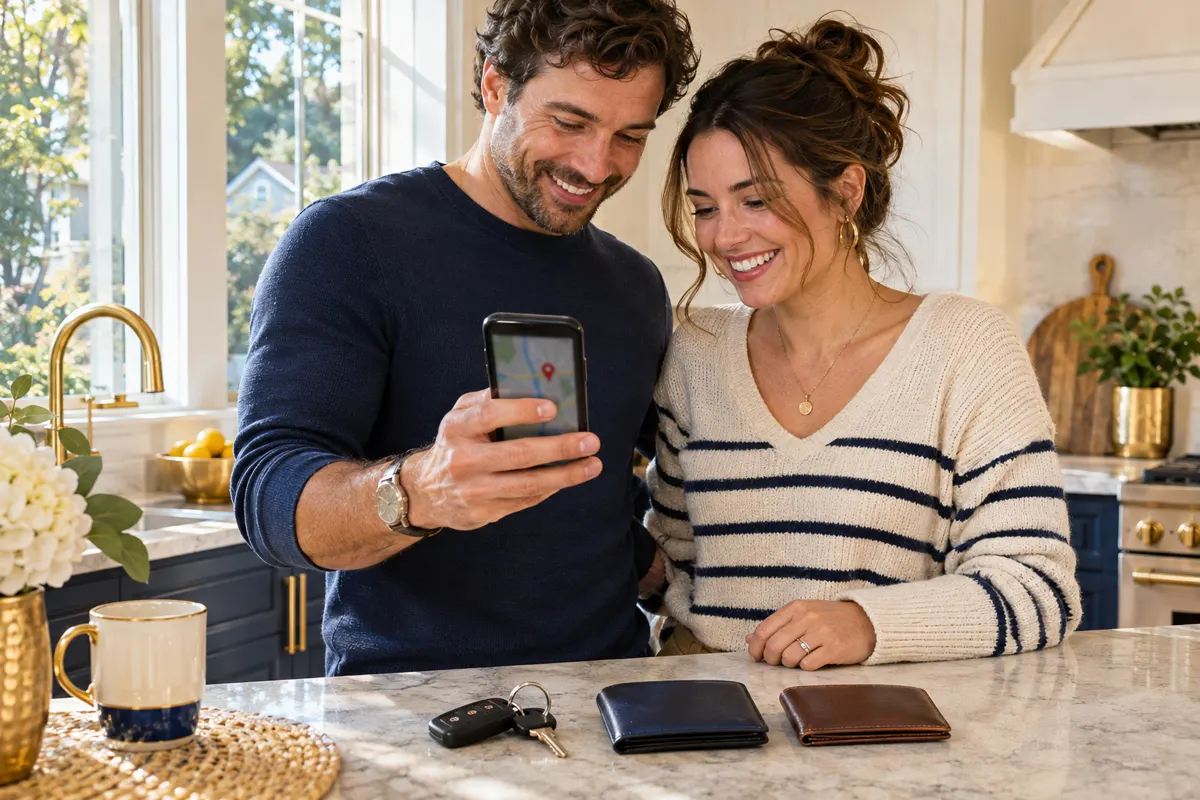
When you live alone, a lost key is your own problem. Share a home and it becomes a group project. One of you grabs the car key in the morning; the other is looking for it at 6 p.m. A wallet gets borrowed for a quick store run and comes back in the wrong bag. And “I gave it to you!” becomes a weekly line.
This isn’t a guide to keeping tabs on someone (and it’s different from our article on building a system when you’re the one losing things). It’s about partnership: how a couple or a family can use card trackers together so there’s less searching and less friction.
Why shared items disappear more often
Your memory tracks where you put things through habit. When two people use the same item, there are two habits, and nobody knows which one won last. The usual suspects:
- The shared car key lives in the pocket of whoever drove last.
- Spare keys and garage remotes get used rarely, so they never go back.
- “Can you grab my wallet?” — and now it’s in your backpack.
- Kids discover keys are fun and hide them in creative places.
Step 1: Decide together which items get a tracker
Sit down for ten minutes and make a short list. This split works for most couples:
| Item | Belongs to | Lives on whose phone? |
|---|---|---|
| Her wallet | Personal | Hers |
| His wallet | Personal | His |
| Car key | Shared | Main driver’s, shared with the other |
| House key / spare key | Shared | One owner, shared if you like |
That’s exactly why the 4-card bundle is the popular one: two wallets, two shared key rings.
Step 2: Use item sharing in the app
A tracker is set up on one person’s phone. For shared items, the location apps now let you invite others. In Apple’s Find My, you open the item, tap Add Person, and the other person accepts the invitation; an item can be shared with up to five people. Once they accept, they can see it on the map and play a sound too. The owner can remove someone at any time without affecting the others. Android’s Find Hub also offers ways to share trackers; check the item in your app to see what your setup supports.
If one of you uses an iPhone and the other an Android phone, keep it simple: put the shared car key on the phone of the person who drives most. For background on how card trackers work with each system, see is there an AirTag for Android?
Two ground rules that prevent most arguments:
- Personal wallets stay personal. Nobody sees the other person’s wallet unless they clearly want that.
- Things, not people. A tracker never goes secretly into someone else’s bag or car. Beyond trust, modern iPhones and Android phones warn people about unknown trackers traveling with them.
Step 3: One drop spot for everything shared
No tracker replaces a fixed place — it’s the safety net underneath. Agree on one spot by the door (a hook, a bowl, a tray) for everything you both use. The rule: whoever walks in puts the shared key there before taking off their coat. We explain why this works in why we keep losing things.
Step 4: Swap blame for a quick ritual
Used well, a tracker takes the heat out of the conversation. Instead of “Where did you put the keys this time?”, it’s “I’ll make them ring.” Three agreements help:
- Ring first, ask second. Whoever is looking uses the sound before asking anyone.
- Finder returns it. Found items go back to the drop spot, not into your own pocket.
- Monthly 2-minute check together: battery level in the app, a ring test, left-behind alerts still on.
A normal weekday morning — before and after
Before: 7:40, both of you need to leave. The car key isn’t on the hook. Pockets, bags, couch cushions. At 7:52 it turns up in last weekend’s jacket. Both late, both annoyed.
After: 7:40, the key isn’t on the hook again. One tap on Play Sound, a faint ring from the hall closet, found in thirty seconds. That evening, whoever drove last hangs it back up — as agreed. No blame, no debate.
Kids and pets in the house
A card tracker belongs in a wallet or card slot, not in small hands. Store spare cards and wireless chargers out of reach of young children, as you would with any electronic item with a battery. If you have a dog that likes chewing bags, keep wallets out of reach too. For school-age kids, a card in the backpack can help find a forgotten bag — to find the backpack, not to track the child.
What couples often try first
Many start with a single round tag on the car key and are surprised the wallet still goes missing. Others buy chunky tags that bulge in a wallet and end up in a drawer. A flat card like the Ondrela card tracker slips into any wallet’s card slot and simply stays there — which is why it actually gets used.
Our recommendation: the Ondrela card tracker
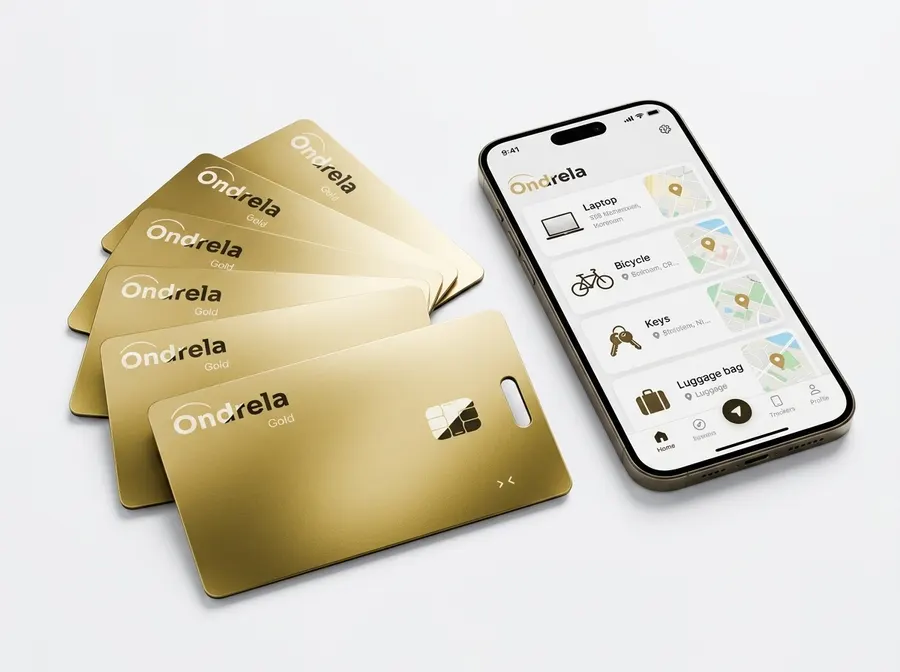
For couples and families who want to search less and argue less, the Ondrela card tracker is the solution we recommend:
- Ring on demand for the key in the wrong jacket.
- Left-behind alerts when a wallet or key stays behind.
- Last known location on the map through the finder network built into iPhone and Android — no extra app, no subscription.
- Credit-card thin, water resistant, wireless charging, around six months of battery per charge.
For two wallets and two shared key rings, the 4-card bundle at $99.96 ($24.99 per card) is the most popular choice. You can also get 1 card for $44.99, 2 for $69.98 or 3 for $89.97, with $4.95 standard shipping and a 60-day return policy. See every detail in our full review or compare bundles on the home page.
Frequently asked questions
Can I share a card tracker with my partner?
In Apple’s Find My you can share an item with up to five other people: open the item, tap Add Person and they accept the invitation. Android’s Find Hub also offers sharing options. Check the item in your app to see what your setup supports.
How many card trackers does a couple need?
Usually four: one for each wallet, one for the shared car key and one for the house key. That’s why the 4-card bundle is the most popular.
Is it okay to put a tracker in my partner’s bag?
Not without their clear consent. Card trackers are meant for things, not people, and modern iPhones and Android phones warn people about unknown trackers traveling with them.
What if one of us has an iPhone and the other an Android phone?
Each tracker works with the phone it was set up on. Personal wallets go on their owner’s phone, and shared keys go on the phone of the person who uses them most.
Are card trackers safe in a home with young children?
A card tracker belongs in a wallet or card slot. Store spare cards and chargers out of reach of young children, as you would with any electronic item with a battery.