Quick answer
Most lost keys and wallets come down to two missing things: a fixed place for them at home and a way to find them when they’re not there. So the shopping list is short: wall hooks and a drop tray for the entryway, a bright keyring or carabiner, a zip pouch and a few labels, a wireless charging pad — and a tracker card for your wallet that slides into a card slot and shows up on your phone’s map. Everything below is organized by aisle so you can grab it in one trip.
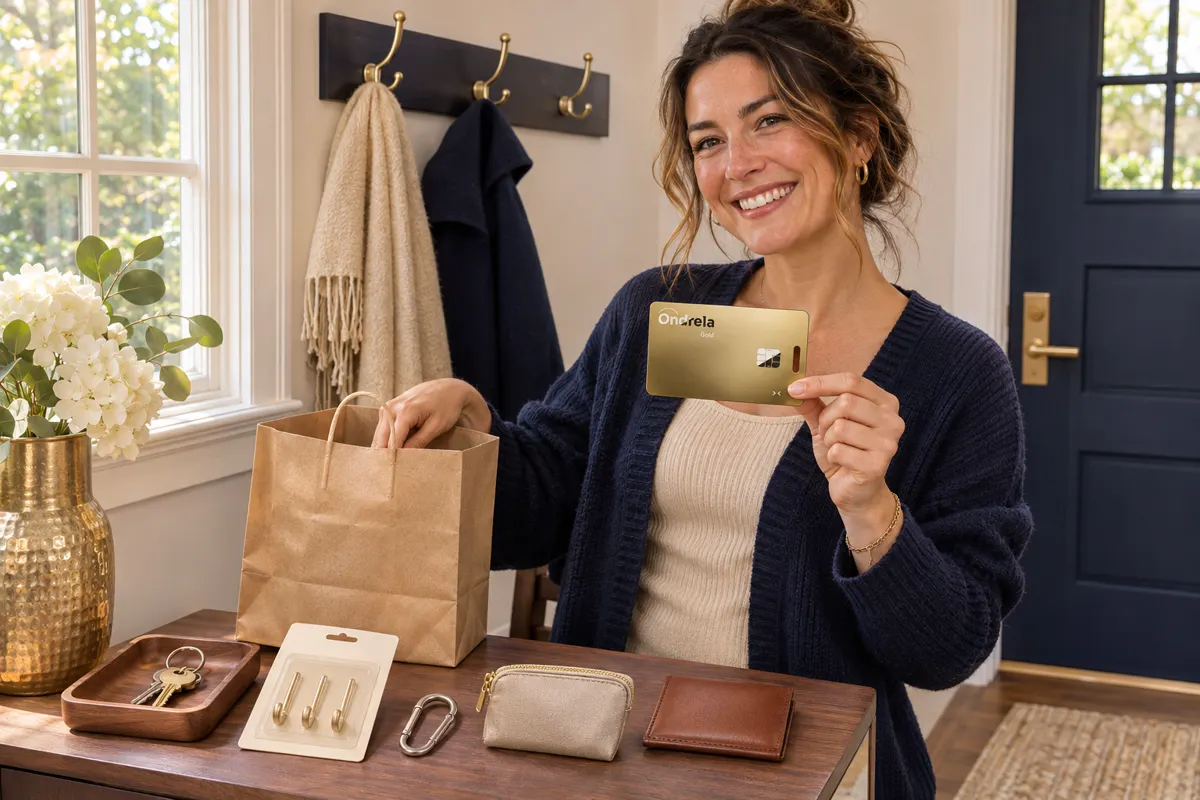
“Tracker card for wallet” has been one of the fastest-rising tracker searches in the US this fall, and it makes sense: people are tired of the same five-minute hunt every morning. But a tracker works best as the last line of defense, not the only one. A couple of cheap, boring items at home stop most of the searching before it starts.
We built this list the way you’d actually shop: aisle by aisle, with what each item fixes and when you can skip it. You won’t need all twelve. Pick the ones that match the moments you lose things most — if you’re not sure what those are, our “Where did I lose it?” log helps you find out in two weeks.
Before you shop: the two rules behind the list
- Rule 1: everything gets a home. Keys, wallet and phone should land in the same spot every time you walk in. Most “lost” items are really items without a home.
- Rule 2: what can wander gets a tracker. Wallets, keys and bags leave the house with you, so a home only helps half the day. The other half needs something you can ring or see on a map.
Every item below supports one of those two rules. That’s also why the list ends with a tracker card: it’s the piece that keeps working once you’re out the door.
Aisle 1: hardware
- Wall key hooks. A short row of hooks right next to the door, at hand height, one hook per person. Visible hooks beat a drawer because you see at a glance whether the keys are home. Adhesive hooks work if you rent.
- A carabiner or a bright keyring. Clipping keys to a belt loop or bag strap keeps them from sliding out of pockets in the car or on the couch. A brightly colored ring or short lanyard also makes keys easier to spot in a dark bag.
- A spare key, stored smartly. Cut one spare for the house and leave it with someone you trust rather than under the mat. It doesn’t prevent loss, but it turns a lost key from a crisis into an inconvenience.
Aisle 2: home goods
- An entryway tray or bowl. The landing spot for wallet, keys, sunglasses and earbuds. Choose something shallow, so nothing hides under anything else.
- One small basket per person. In busy homes, a basket per family member stops the “who moved my keys?” argument. Our guide on sharing card trackers as a family pairs well with this.
- A wall shelf or console by the door. Only if you don’t have a surface already. The tray needs to live where you naturally pause when you come in.
Aisle 3: office supplies
- A zip pouch for small stuff. A brightly colored pouch in your everyday bag for earbuds, transit cards and spare keys. Items in a pouch don’t sink to the bottom.
- Labels or a simple label maker. Label the key hooks, the spare-key envelope and the pouch. Labels sound fussy, but they make the system obvious to everyone in the house.
- Sticky notes for the door. A note at eye level on the inside of the door (“wallet, keys, phone”) is a free, old-school reminder that still works on busy mornings.
Aisle 4: travel
- A passport holder or travel organizer. One place for passport, boarding passes and a backup card during the holidays. Airports are where wallets and documents most often get separated from their owners; see what to do if you leave something at TSA.
- Luggage tags with contact details. Inexpensive and still useful: a tag with your email or phone number helps an honest finder reach you.
Aisle 5: electronics — the item that finishes the list
- A wireless charging pad and a tracker card for your wallet. Put the pad on the entryway tray: your phone charges there at night, and so can a rechargeable tracker card when it needs it. Then slip the tracker card into your wallet’s card slot. Unlike a round tag, a card tracker doesn’t create a bump, so you forget it’s there until the day you need it. The one we recommend is the Ondrela card, which works with the finder app already on your phone.
The whole list on one screen
| Aisle | Item | What it fixes | Skip it if… |
|---|---|---|---|
| Hardware | Wall key hooks | Keys with no fixed home | You already have a hook system you use |
| Hardware | Carabiner / bright keyring | Keys sliding out of pockets | You carry keys in a zipped pocket |
| Hardware | Spare key with someone you trust | Lockouts after a loss | Your home uses a keypad lock |
| Home | Entryway tray | Wallet dropped “anywhere” | Never — this is the core item |
| Home | One basket per person | Mix-ups in busy homes | You live alone |
| Office | Bright zip pouch | Small items lost in the bag | Your bag already has organizer pockets |
| Office | Labels + door note | Systems no one else follows | Everyone at home already knows the spots |
| Travel | Passport holder + luggage tags | Documents scattered on trips | You don’t travel this season |
| Electronics | Wireless pad + tracker card for your wallet | Finding things once they leave the house | — this is the item that covers everything else |
How to set it up in one evening
Bring everything home, then give yourself twenty minutes. Mount the hooks, set the tray and pad on the console, and drop everyone’s keys and wallets in their spots. Add the tracker card to Find My (iPhone) or Find Hub (Android), give it a clear name like “Wallet,” and turn on the left-behind alert. Then do one test: leave the wallet on the tray and walk to the end of the street. When the alert arrives, you’ll know the system works.
Our recommendation: the Ondrela card tracker
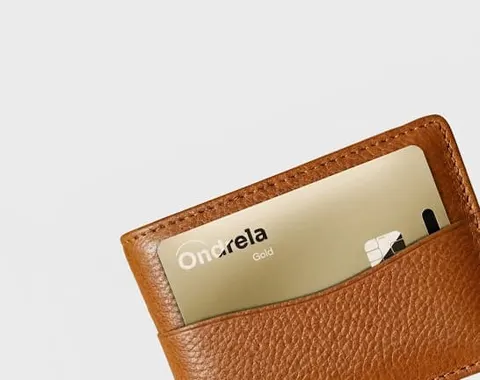
Hooks and trays keep things at home; the Ondrela card tracker takes over the moment your wallet, keys or bag leave the house. It’s the tracker card for wallets we recommend, because it was designed exactly for this job:
- Credit-card thin, so it slides into a wallet slot, passport holder or bag pocket with no bulge.
- Works in Find My on iPhone and Find Hub on Android, with no extra app and no subscription.
- Ring on demand and left-behind alerts, so you hear it under the couch and get warned before you walk away from it.
- Rechargeable on any standard wireless pad, with a stated battery life of around six months per charge, and water resistant for everyday life.
The 4-card bundle at $99.96 ($24.99 per card) is the most popular choice — one each for the wallet, keys, everyday bag and suitcase. You can also get 1 card for $44.99, 2 for $69.98 or 3 for $89.97, with $4.95 standard shipping and a 60-day return policy. See every detail in our full review or compare bundles on the home page.
Frequently asked questions
What should I buy if I always lose my keys?
Start with a fixed landing spot by the door (wall hooks or a small tray), a bright, easy-to-grab keyring or carabiner, and a tracker on the key ring or in the bag you carry them in. The first two prevent most losses; the tracker finds the rest.
Is a tracker card for a wallet better than a round tracker?
For a wallet, usually yes. A credit-card-shaped tracker slides into a card slot without the bump a round tag creates, so you stop noticing it is there. Round tags are still handy on a key ring.
Do I need a subscription for a tracker card?
Not for the Ondrela card. It works in Find My on iPhone and Find Hub on Android with no extra app and no subscription.
How many tracker cards should I buy?
Count the things you hunt for most often: wallet, keys, everyday bag, suitcase. Many households end up with three or four, which is why the 4-card bundle ($24.99 per card) is the most popular option for the Ondrela card.
Can the wireless charger I already own charge the Ondrela card?
Yes. The Ondrela card charges on standard wireless charging pads, the same kind many phones use, with a stated battery life of around six months per charge.