Quick answer
“Ondrela tracker,” “Ondrela gold card” and “Ondrela smart tracker card” all describe the same product: a gold, credit-card-thin item tracker for your wallet, passport holder or bag. It isn’t a cellular GPS tracker, it isn’t an RFID-blocking card and it doesn’t need its own app. It works with Find My on iPhone and Find Hub on Android, rings on command, warns you when you leave it behind and recharges on a wireless pad.
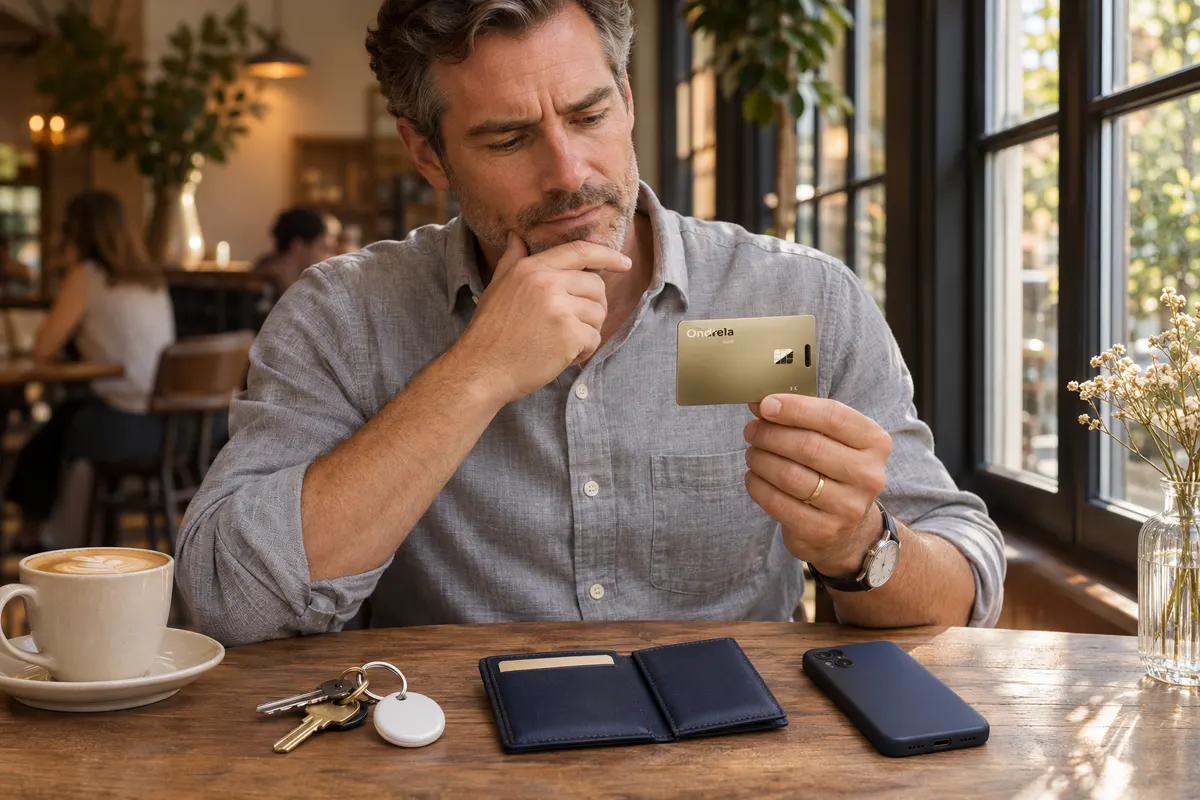
If you’ve searched for the Ondrela tracker, you’ve probably seen it called half a dozen different things: gold card, smart card, tracking card, smart tracker card. Add the general confusion around item trackers (Is it GPS? Is it like an AirTag? Is it one of those RFID cards?) and it’s easy to end up unsure what you’d actually be buying.
This guide clears up the seven mix-ups we see most often. For each one you get a short answer, why people confuse the two, and what it means in daily life. At the end there’s a single comparison table you can screenshot.
Confusion 1: “Ondrela tracker” vs “Ondrela gold card” vs “smart tracker card”
Short answer: same product. The card has a gold finish, which is why many people call it the “Ondrela gold” or “gold tracker card.” Others describe what it does (“tracker,” “tracking card”) or how it’s built (“smart card”). The official site sells one card design; the only choice you make is how many cards you get, from 1 to 4. Our full Ondrela review covers the specs and the verified prices.
Watch out for: misspellings like “Ondrella” or “Andrela” in search results and marketplace listings. If you want the real card, buy from the official site linked on this page. Still a little doubtful? We answer the 8 most common skeptical questions in is the Ondrela tracker legit?
Confusion 2: tracker card vs GPS tracker
Short answer: different technology. A cellular GPS tracker has its own satellite receiver and a SIM card, so it can report its position live wherever there’s mobile coverage. In exchange it’s much thicker and usually comes with a monthly plan. A tracker card like Ondrela uses Bluetooth and the finder network built into phones: when it’s away from you, nearby iPhones or Android phones anonymously help update its location on your map.
In daily life: for a wallet, passport or bag, the card is the practical choice: it fits in a card slot and there’s no subscription. We go deeper in Bluetooth finder vs GPS tracker.
Confusion 3: tracker card vs AirTag
Short answer: similar network, different shape. Round tags like the AirTag and card trackers both rely on the phone finder network, so finding ability is comparable. The difference is form: a round tag hangs nicely on a key ring but bulges inside a wallet, while a card slides into a card slot like any other card. Ondrela also works with Android (Find Hub), not just iPhone. See AirTag vs card tracker, honestly compared.
Confusion 4: tracker card vs RFID-blocking card
Short answer: they do opposite jobs. This is the mix-up we see most among people new to the category, because both are “smart cards” that live in your wallet. An RFID-blocking card is a passive shield meant to stop contactless cards from being read. A tracker card is an active device: a Bluetooth radio, a small speaker and a rechargeable battery that help you find the wallet when it goes missing. One protects card data; the other protects the wallet itself.
Confusion 5: “the Ondrela app” vs your phone’s built-in finder app
Short answer: there’s no separate app. People search for an “Ondrela app” expecting to download something. You don’t need to: the card pairs with Find My on iPhone or Find Hub on Android, the apps already on your phone. Nothing new to learn and no extra account. Step by step in does the Ondrela card need an app?
Confusion 6: left-behind alert vs live tracking
Short answer: one prevents, the other finds. A left-behind alert is your phone noticing that you walked away from the card and warning you on the spot, often before the wallet is really lost. Location on the map is what you check afterwards, when it’s already somewhere else. The combination is the strength of a tracker card: most of the time the alert means you simply turn around and pick the wallet up from the café table.
Confusion 7: rechargeable vs coin-cell battery
Short answer: Ondrela recharges. Many round tags run on disposable coin cells you replace once in a while. The Ondrela card has a built-in rechargeable cell: you place it on any standard wireless charging pad, and the maker lists around six months of battery per charge. If yours has been sitting unused, our guide to checking a tracker battery after months walks you through it.
The comparison table
| Item | What it is | Best for | Subscription? |
|---|---|---|---|
| Ondrela tracker / gold card | Card-thin Bluetooth tracker, rechargeable, works with Find My and Find Hub | Wallets, passport holders, bags, luggage | No |
| Round tag (AirTag-style) | Round Bluetooth tag on the phone finder network | Key rings, backpacks | No |
| Cellular GPS tracker | GPS receiver plus SIM card, live position | Vehicles, large items | Usually yes |
| RFID-blocking card | Passive shield, no battery, no location | Shielding contactless cards | No |
| Phone finder app | Find My (iPhone) or Find Hub (Android) | Seeing and ringing your devices and trackers | Free, built in |
The pattern is simple: if the thing you want to protect lives in a card slot, a card-shaped tracker is the one designed for the job.
Our recommendation: the Ondrela card tracker
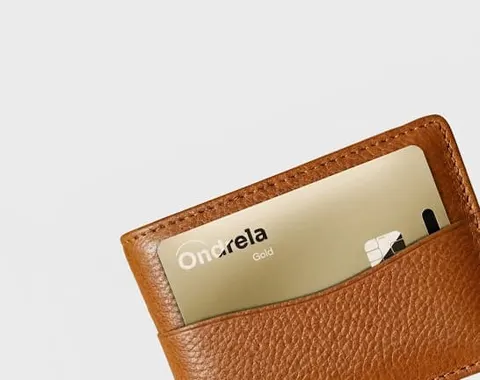
Now that the names and mix-ups are out of the way, here’s our verdict: the Ondrela tracker card is the one we recommend for anyone who wants to stop losing a wallet, passport holder or bag. It’s made exactly for the places round tags don’t fit.
- Credit-card thin, so it slides into any card slot without bulk.
- Works with Find My on iPhone and Find Hub on Android, no extra app and no subscription.
- Left-behind alerts and ring on command, the prevent-and-find combination.
- Rechargeable on any wireless pad, with around six months per charge stated by the maker, and water resistant.
The 4-card bundle at $99.96 ($24.99 per card) is the most popular choice; 1 card is $44.99, 2 are $69.98 and 3 are $89.97, with fast standard shipping and a 60-day return policy. Get every detail in our full review or compare bundles on the home page.
Frequently asked questions
Is the Ondrela tracker the same as the Ondrela gold card?
Yes. “Ondrela tracker,” “Ondrela gold card,” “Ondrela gold tracker card” and “Ondrela smart tracker card” are different ways people describe the same product: a credit-card-sized item tracker with a gold finish. The bundles on the official site differ only in how many cards you get (1 to 4).
Is the Ondrela tracker a GPS tracker?
Not in the cellular sense. It doesn’t carry a SIM card or charge a monthly fee. It uses Bluetooth and the finder network already built into iPhone and Android phones, so nearby phones help update its location on the map in Find My or Find Hub.
Is a tracker card the same as an RFID-blocking card?
No. An RFID-blocking card is a passive shield meant to stop contactless cards from being read. A tracker card like Ondrela is an active device with a Bluetooth radio, a speaker and a rechargeable battery that helps you locate your wallet. They do different jobs.
Do I need an Ondrela app?
No. There is no separate Ondrela app or account. The card works with the finder app already on your phone: Find My on iPhone or Find Hub on Android.
How is the Ondrela card charged?
On any standard wireless charging pad, the same kind many phones use. The maker lists around six months of battery life per charge, so there are no coin cells to replace.