Quick answer
If you keep losing things, the cause is usually not a bad memory but a handful of small habits that make you set keys and wallets down on autopilot: carrying them from room to room, putting them down while on the phone, switching coats and bags, the counter pile, rushing out, and tired evenings. Each one is easy to miss and easy to fix with a tiny swap. For the moments a habit still slips, a tracker card in your wallet ends the search in seconds.

“Why do I keep losing things?” is usually asked in frustration, halfway through the third search of the week. The useful answer is less about your brain in general (we cover that in why we keep losing things) and more about specific moments in your day that quietly set you up to lose something. Below are nine of them. For each: why it makes things worse, how to tell if it's happening to you, and the simple swap.
1. Carrying your wallet or keys from room to room
Why it makes things worse: every room is a new place to set something down. Researchers led by psychologist Gabriel Radvansky at the University of Notre Dame found that simply walking through a doorway makes people more likely to forget what they were doing, a finding often called the “doorway effect.”
How to tell: you find your keys in the bathroom, the bedroom or next to the laundry basket.
The swap: keys and wallet go to one landing spot the moment you walk in, and they don't travel further into the house.
2. Putting things down while you're on the phone
Why it makes things worse: your attention is in the conversation, so the act of setting the keys down is never really “recorded.” You can't remember what you never noticed.
How to tell: the item turns up somewhere you'd never deliberately put it, and you have no memory of doing it.
The swap: if you're on a call when you get home, hold the keys until you reach the landing spot, or say out loud “keys on the hook.” It sounds silly; it works.
3. The coat and bag swap
Why it makes things worse: in November people start rotating between a light jacket, a winter coat, a gym bag and a work bag. The wallet stays in yesterday's pocket.
How to tell: you've stood in a checkout line patting pockets that belong to the wrong coat.
The swap: wallet, keys and phone live in one small pouch or a fixed pocket that moves with you, not in whatever you happened to wear.
4. The counter pile
Why it makes things worse: mail, grocery bags and school papers land on the same surface as your keys. Clutter is camouflage: a wallet half under a paper bag is effectively invisible.
How to tell: your search always starts by lifting things off the kitchen counter.
The swap: keep one small tray or hook that holds only keys and wallet. Nothing else allowed on it.
5. Leaving in a rush
Why it makes things worse: hurry narrows attention to the clock. You leave the café table, the gym bench or the car seat without the usual glance back.
How to tell: most of your losses happen on the way out of somewhere, not on the way in.
The swap: a two-second “phone, keys, wallet” touch check whenever you stand up. Pair it with an alert that does the checking for you (see below).
6. Tired evenings
Why it makes things worse: attention is what writes down where you put things, and attention drops when you're short on sleep. The CDC data show that in every US state roughly 30% to 46% of adults don't get enough sleep, which makes late evenings prime time for misplacing things.
How to tell: the morning search is for something you put down after 9 p.m.
The swap: do your landing-spot check before you sit down for the evening, not when you're heading to bed.
7. Your phone in your hand
Why it makes things worse: one hand holds the phone, so the wallet or keys get parked on the nearest surface to free the other hand: a shelf in a store, the roof of the car, a restaurant table.
How to tell: you've ever driven off with something on the car roof, or nearly did.
The swap: pocket the phone before you handle your wallet or keys, not after.
8. Guests, holidays and shared spaces
Why it makes things worse: when other people tidy up, your things move without you. During holiday gatherings, keys and wallets end up in drawers, on guest-room dressers or in someone else's coat pile.
How to tell: your question is “who moved my keys?” rather than “where did I put them?”
The swap: agree on a shared rule at home: nobody moves someone else's keys or wallet off the landing spot. For families, our guide to sharing tracker cards without arguments helps.
9. A change in routine
Why it makes things worse: habits are tied to context. A new job, a trip, a moved piece of furniture or a different commute breaks the automatic “keys go here” chain, and you're back to guessing.
How to tell: the losses cluster around trips, moves or the first weeks of something new.
The swap: rebuild the landing spot on day one of any new routine, and on trips choose one zipped pocket of your bag for wallet, keys and passport.
Spot your hidden triggers at a glance
| Hidden habit | Typical sign | Simple swap |
|---|---|---|
| Room to room | Keys in odd rooms | One landing spot at the door |
| On the phone | No memory of putting it down | Hold it until the landing spot |
| Coat/bag swap | Wallet in yesterday's coat | One pouch that travels with you |
| Counter pile | Search starts under mail | A tray for keys and wallet only |
| Rushing out | Losses on the way out | Touch check + left-behind alert |
| Tired evenings | Morning searches | Check before you sit down |
| Phone in hand | Things left on surfaces | Pocket the phone first |
| Guests/holidays | “Who moved it?” | House rule: don't move it |
| New routine | Losses after changes | Rebuild the spot on day one |
Want proof of which ones are yours? Keep our 14-day “Where did I lose it?” log: after two weeks, the pattern is usually obvious.
Why habits alone don't close the gap
Every swap above lowers how often things go missing. None of them gets you to zero, because the whole point of a hidden habit is that you don't notice it in the moment. That's the gap a tracker fills. A slim card like the Ondrela tracker card sits in your wallet, and its left-behind alert notices the café table and the gym bench for you. If you'd like a quieter mind about it too, our piece on anxiety about losing things covers the emotional side.
If losing things happens constantly, disrupts work or relationships, or comes with other memory or attention changes, talk to your doctor. Frequently misplacing items is one of the recognized signs of ADHD in adults, and our 6-step ADHD-friendly system may help either way.
Our recommendation: the Ondrela tracker card
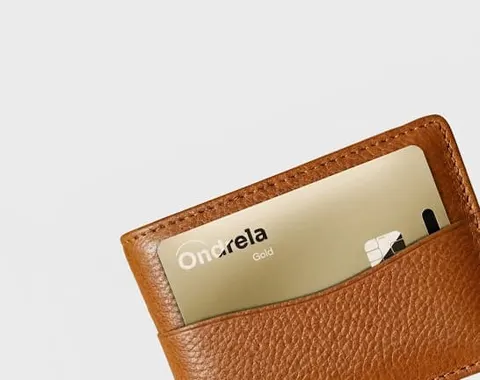
You can fix most of your hidden triggers with a hook and a habit. For the rest, the Ondrela tracker card is the tool we recommend: it's made exactly for the moments you don't notice. It slides into your wallet like any other card, warns your phone when you walk away without it and rings on command when it's hiding under the mail.
- Credit-card thin, so it slides into any card slot without bulk.
- Works with Find My on iPhone and Find Hub on Android, with no extra app and no subscription.
- Left-behind alerts and ring on command, so a forgotten wallet is caught before it's lost.
- Rechargeable on any wireless pad, with around six months per charge stated by the maker.
The 4-card bundle at $99.96 ($24.99 per card) is the most popular choice, enough for your wallet, keys, bag and a partner's wallet; 1 card is $44.99, 2 are $69.98 and 3 are $89.97, with fast standard shipping and a 60-day return policy. Get every detail in our full review or compare bundles on the home page.
Frequently asked questions
Why do I keep losing things all the time?
For most people it isn't a memory problem. Things get set down on autopilot while attention is elsewhere: on a phone call, a doorway, a hurry or a tired evening. When nothing in your routine catches those moments, the same items keep going missing.
Can walking into another room make me forget where I put something?
It can. Studies by psychologist Gabriel Radvansky and colleagues found that walking through a doorway makes people more likely to forget what they were just doing, an effect often called the doorway effect. Carrying a wallet or keys from room to room adds more chances to set them down and forget.
Does being tired make you lose things?
Being short on sleep makes it harder to pay attention, and attention is what records where you put things. CDC data show that in every US state roughly 30% to 46% of adults don't get enough sleep, so tired evenings are a common hidden reason items go missing.
Is losing things a sign of ADHD?
Frequently losing everyday items is one of the recognized signs of ADHD, but almost everyone misplaces things sometimes. If it happens constantly, affects work or relationships, or comes with other attention or memory changes, talk to your doctor.
What is the easiest way to stop losing keys and wallets?
Give each item one landing spot by the door, stop carrying it from room to room, and add a tracker card with a left-behind alert so the moments your habits fail don't turn into a long search.
Sources: Radvansky, Krawietz & Tamplin, “Walking through doorways causes forgetting,” Quarterly Journal of Experimental Psychology (2011); CDC, adult sleep facts and stats.