Quick answer
Keys, phone and wallet rarely go missing one at a time. They share the same rushed exits, the same pockets and the same jacket or bag, so when one disappears the others often go with it. Find the phone first (it can be located), then use it to locate the rest. To stop the repeat, give the three items one landing spot at home and put a tracker on the two that can't ring themselves: your keys and your wallet.
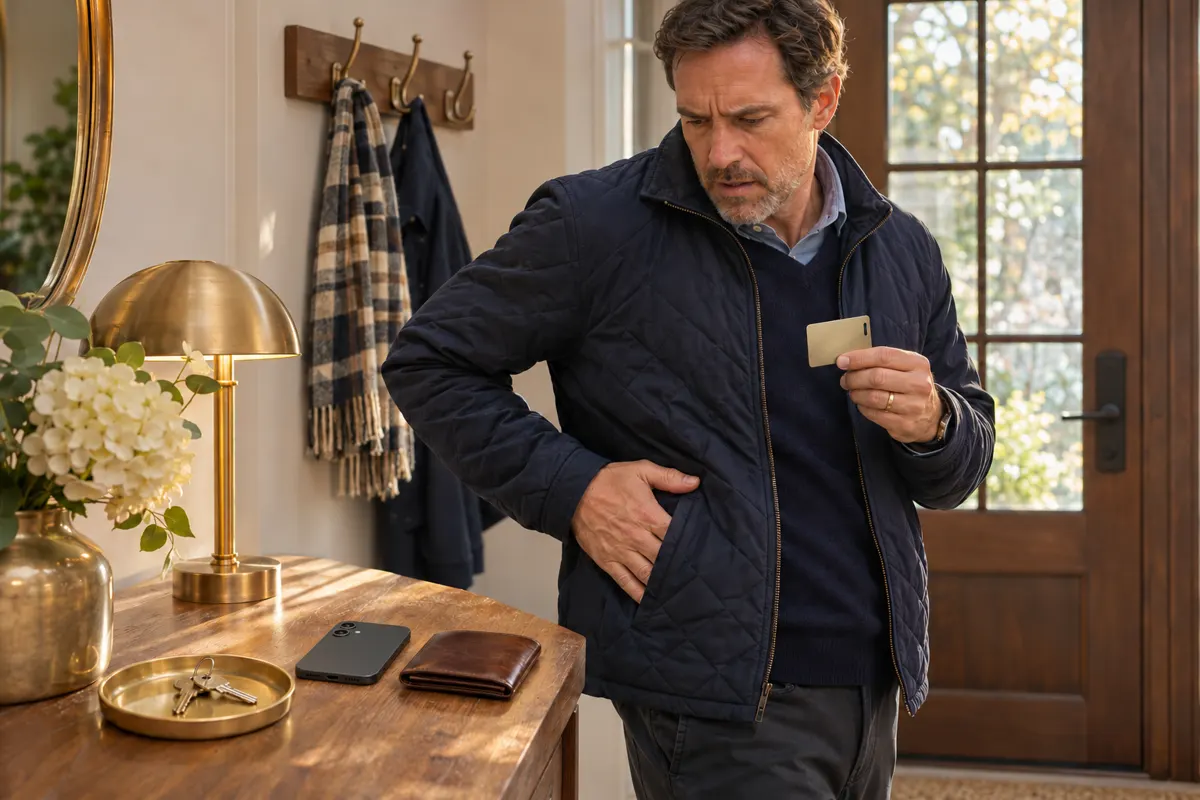
“Where are my keys? I lost my phone” is one of the fastest-rising searches around lost keys in the US right now, and it captures something everyone has lived through: the double loss. You're late, the keys aren't on the hook, and when you reach for your phone to check the time, it isn't in your pocket either. That's not bad luck. Everyday items travel in a bundle, and they get lost in a bundle. Once you see the pattern, the fix covers all of them at once.
How common is it?
Very. In the widely cited 2017 Pixie “Lost and Found” survey of US adults, phones (33%), car and house keys (28%) and wallets and purses (20%) were all among the items people misplace most often, and Americans spent about 2.5 days a year looking for lost things. Other surveys rank them in a slightly different order, but the same three show up near the top every time. If you want your own numbers, our 14-day “Where did I lose it?” log shows exactly where your losses cluster.
Why these losses come together
Most losses happen at a transition: leaving the house, getting out of the car, sitting down at a restaurant, swapping bags. Those are exactly the moments when keys, phone and wallet are all in your hands at once. Here's the bundle, problem by problem:
| Problem that shows up together | Why it appears with the others | What to do |
|---|---|---|
| Lost keys + lost phone | Same rushed exit; both were set down at once to free your hands | Find the phone first, then use it to locate the keys |
| Wallet and keys left behind somewhere | Put on a table or car seat together when hands were full | A left-behind alert on the wallet; a key ring with a tracker |
| Everything “gone” after a jacket or bag swap | The items live in the container, so the container moves them all | Search yesterday's coat and bag first; one fixed pocket per item |
| Rushing and running late | Attention goes to the clock, not to what's in your hands | A 10-second pocket check at the door: keys, phone, wallet |
| Cluttered entry table or counter | Small items disappear under mail, bags and groceries | One clear landing tray used only for these three |
| Short sleep, stress, a busy season | Tired, distracted brains slip more on routine tasks | Lean on systems (tray, alerts) instead of memory on hard weeks |
The key insight: the phone is the only one of the three that can usually be found by itself, because it can be called or located on a map. Keys and wallets are silent. That asymmetry is why the fix starts with them.
Lost two things at once? Do it in this order
- Locate the phone. Call it from another phone, or sign in to Find My (iCloud.com/find) or Google's Find Hub from any browser. If it's truly lost, our lost or stolen phone guide has the full steps.
- Use the phone to find the rest. If your keys or wallet carry a tracker, they show on the same map. Ring them when you're close.
- Search the last container. Yesterday's jacket, the gym bag, the car, the grocery bag. Bundled items are usually still together.
- Retrace the last transition: your last exit or arrival, not the whole day.
- If the wallet is really gone, freeze your cards and follow our first-hour lost wallet checklist.
Fix the bundle, not each item
Because the three items share the same moments, one small system fixes all of them:
- One landing spot. A tray by the door that holds only keys, phone and wallet. Coming in, everything goes there; going out, everything comes from there.
- One pocket per item. Phone always left front, keys always right, wallet always in the same inside pocket. A missing bump gets noticed instantly.
- A door check. Touch three pockets before the door closes. It takes ten seconds and catches most mistakes.
- Make the silent items findable. Your phone already knows where it is. Give your wallet and keys the same ability with a tracker, so your phone can find them and warn you before you walk away. A thin card like the Ondrela tracker card fits a wallet slot, and its slot hole lets a second card ride on a key ring.
If the losses feel constant rather than occasional, read why you keep losing things for the everyday habits behind it.
Our recommendation: the Ondrela tracker card
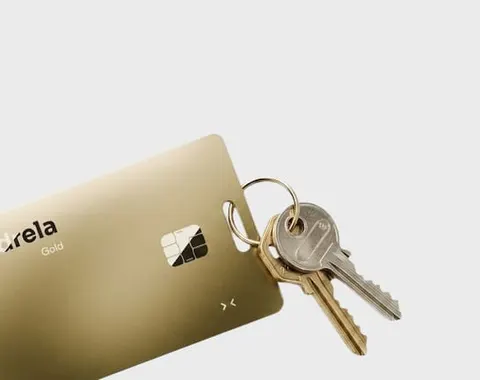
When keys, phone and wallet go missing together, the phone is your search tool, but only for things it can see. The Ondrela tracker card is the tracker we recommend because it gives your phone eyes on the two items that can't call out: one card in your wallet, one on your key ring. It's the most practical way to turn a double loss into a two-minute search.
- Credit-card thin, so it slides into any wallet slot without bulk, and the slot hole fits a key ring.
- Works with Find My on iPhone and Find Hub on Android, with no extra app and no subscription.
- Left-behind alerts and ring on command, so a forgotten wallet or set of keys is caught before it's lost.
- Rechargeable on any wireless pad, with around six months per charge stated by the maker.
The 4-card bundle at $99.96 ($24.99 per card) is the most popular choice, enough for your wallet, keys, bag and a partner's wallet; 1 card is $44.99, 2 are $69.98 and 3 are $89.97, with fast standard shipping and a 60-day return policy. Get every detail in our full review or compare bundles on the home page.
Frequently asked questions
I lost my keys and my phone at the same time. What do I look for first?
Find the phone first, because it can be located: borrow another device and sign in at iCloud.com/find or Google's Find Hub, or simply call it. Once you have the phone, open Find My or Find Hub to locate any tracker on your keys or in your wallet. Then retrace your last exit or arrival, because the missing items are usually together.
Why do I always lose my keys and phone together?
Because they share the same moments and the same containers. You pick them up in the same rushed exit, put them down together when your hands are full, and carry them in the same jacket or bag. Change the jacket or set the bag down, and all of them move at once.
How do I find my keys if I don't have a tracker on them?
Search the last container first (yesterday's coat, the bag, the car), then the places you put things down with full hands: the kitchen counter, the bathroom, the car seat. Without a tracker, keys cannot be rung or located, which is why a small tracker on the key ring pays off the first time it saves a locksmith call.
Do I need a separate tracker for keys and wallet?
Ideally yes, one per item you can't afford to lose, because keys and wallet do not always stay together. A thin card tracker such as the Ondrela card fits in a wallet slot, and its slot hole lets a second card hang on a key ring.
Can my phone remind me before I leave my keys or wallet behind?
Yes, if the keys or wallet carry a tracker that works with Find My or Find Hub. Turn on the left-behind alert for that item, and your phone notifies you when you walk away from it. Add home as a safe place so it stays quiet when you are home.
Sources: Pixie “Lost and Found” survey of more than 1,700 US adults (2017); Google Trends (US, last 3 months) for “lost keys” related searches; Apple Support and Google Find Hub help pages for locating devices and left-behind alerts.